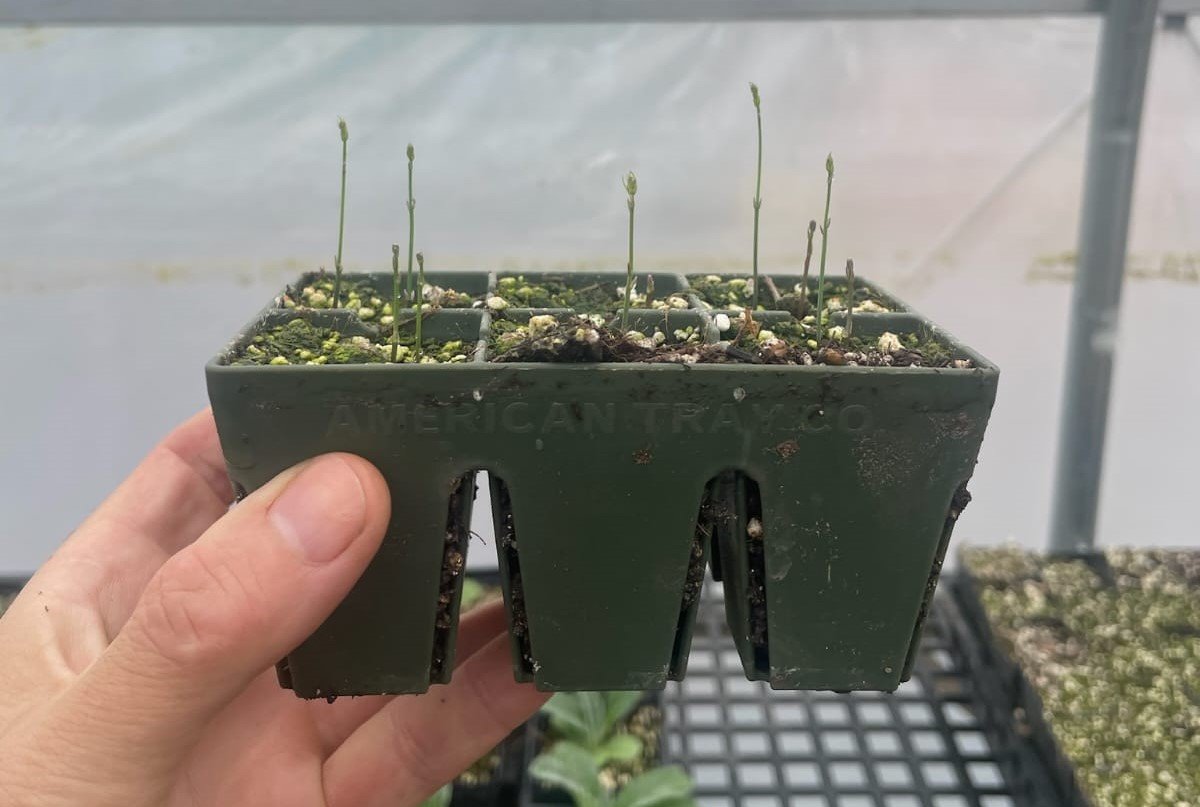
A dear friend of mine from our spiritual sangha, Venetia – shared an amazing analogy from her farm. She told us about how delicate and fragile the fresh sprouts of asparagus are, but I never realized exactly how delicate till she shared this image:
And what’s the point here?
Everything starts out small – but the good habits are like the baby asparagus we want to grow, and they are fragile and delicate, especially in the beginning. Bad habits, like weeds, however, don’t need any special care from us, and can grow up easily, and monopolize extracting the water and nutrients that our baby asparagus so desperately needs to survive. Very soon, their stalks are stronger and crowd much higher taking away, even the sunlight from our baby asparagus, which then withers away.
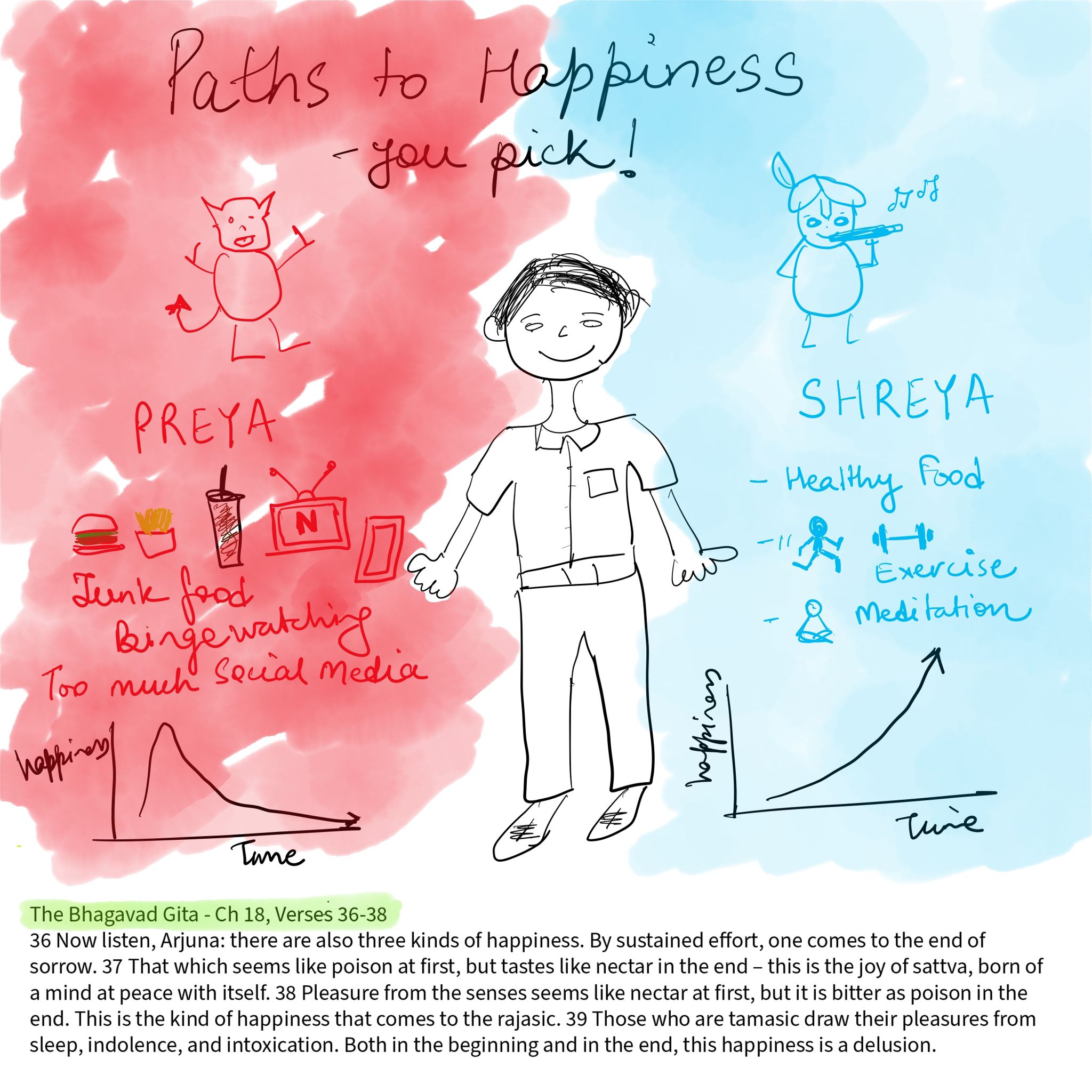
A good gardener, tirelessly removes the weeds and supports the baby asparagus – and the job is never done, because the minute he/she would rest, the weeds would pop back up. This is because weeds, or bad habits have had quite a head start, and are now ingrained in our muscle memory. Bad habits often give the body whatever the senses crave (e.g., unlimited portions of fried, salty and sweet food, binge watching, social media scrolling etc.). Because they are appealing in the short run, they do not need special attention to nurture, and grow quite easily on their own. Tending to the good habits however, seems like a chore and a personal sacrifice. This could be, as a student, studying when your peer group is partying, reading books and scriptures, while your peer group is binge watching television, and eating healthy wholesome food in moderation, while your peer group is enjoying themselves at a nearby restaurant to a second helping of dessert after their decadent entrée.
But lets fast forward a few years. A well tended garden will yield a rich produce, the conscentious student will do well in his career, and make a honest comoftable living, a reader of books will be more knowledgable, and the healthy eater will avoid obesity, and ensuing cardiological issues, while having more energy.
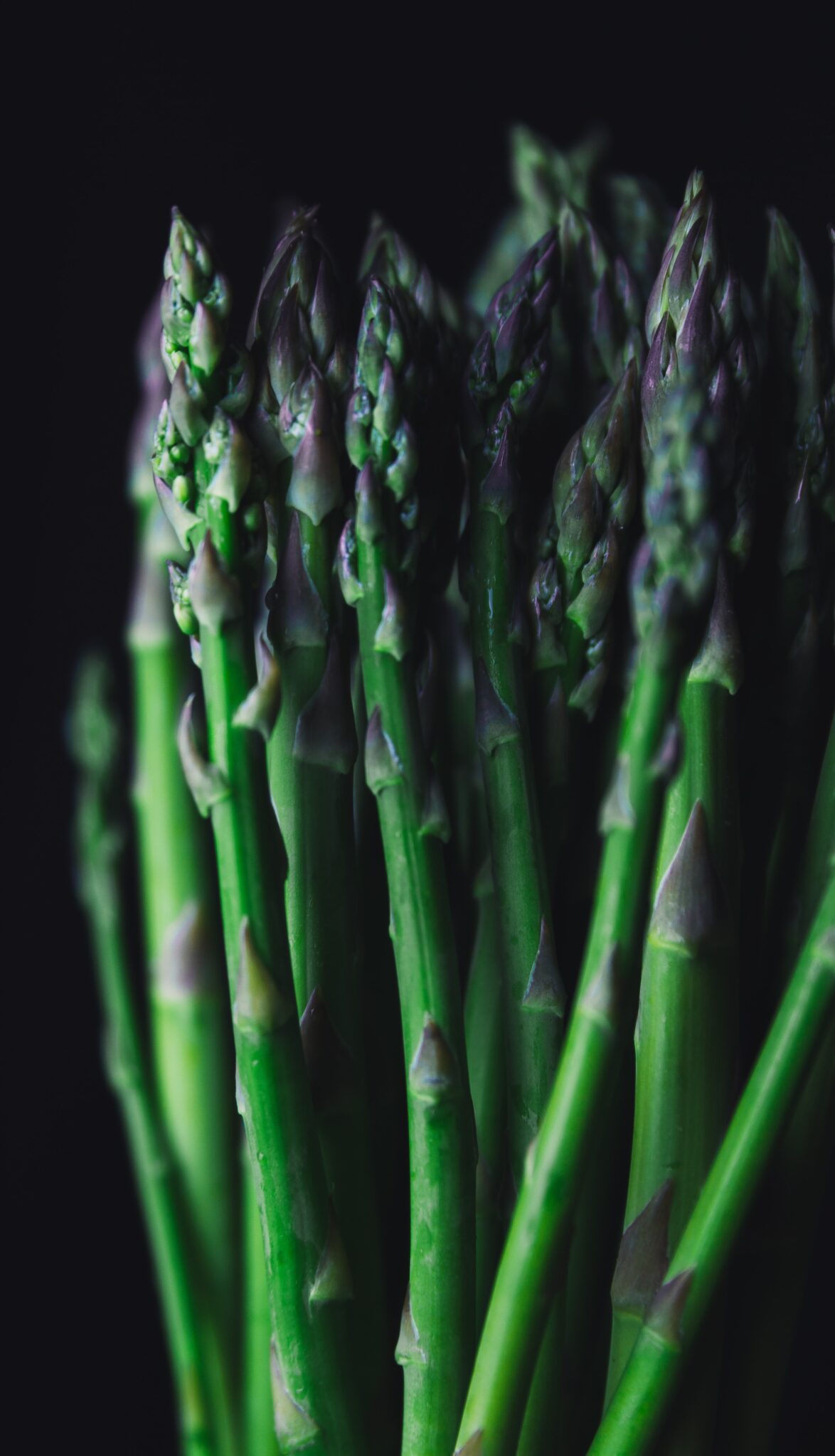
Look at how beautiful and STRONG, the baby asparagus grew up to be:
Therefore, you have the choice to do what’s easy and pleasing in the begining (Preya) – which would be neglecting your garden, or do what is difficult and tiring in the begining (Shreya) – and in doing so you will, over the years reap the corresponding results that will be either bitter (weeds, obseity, etc.) or sweet in the end (beautiful garden, healthy body etc.)
Growing up in the 1990s in India, in a middle-class family, had constraints – and in retrospect, those constraints were GOOD for learning and creativity.
There were just two TV channels, DD National and DD Metro, with limited programming. No streaming, no computers, no internet, no smart phones. I read books both for fun (fiction, I remember reading lots of Enid Blyton, some Judy Blume) and knowledge (Brittanica, self-help books like Dale Carnegie’s how to make friends and influence people), and also maintained a journal where I summarized the books I read, and what I learnt from them…
My mom used to take me to BC Roy Children’s Reading Room and Library, each Saturday I believe, by taking a DTC bus and a bit of walking. Eventually, she had confidence to send me alone a couple of times, or may not – my memory plays tricks. We used to read in their reading room, and also borrow books at times.
As studies became more intense in higher classes (e.g., X for boards, XI and XII to get into a good college, then SRCC and Chartered Accountancy), and subsequently to make a mark in corporate world – reading took a back seat. I remember reading very less, and only a handful of books comes to mind in an entire stretch of 2000-2021 – seven habits of highly effective people, the little prince, the monk who sold his Ferrari.
While I blame higher studies and corporate world as a reason, the truth is I did find time to binge watch TV series… so many of them: Friends, 24, Seinfeld, Sex and the City etc. So there was time, just not for reading.
I did buy books that I intended to read, but some I did not even open, while others were abandoned mid-way. I even bought an e-reader – nook simple touch during December 2013 deals – it was a generation old at the time and had found it at a good price. I bought a few books in that device, and side-loaded some – but reading never caught traction. I probably just finished two books on it – Stumbling upon Happiness and Leadership and Self-Deception. Then it lay collecting dust in a corner (still there, functional)
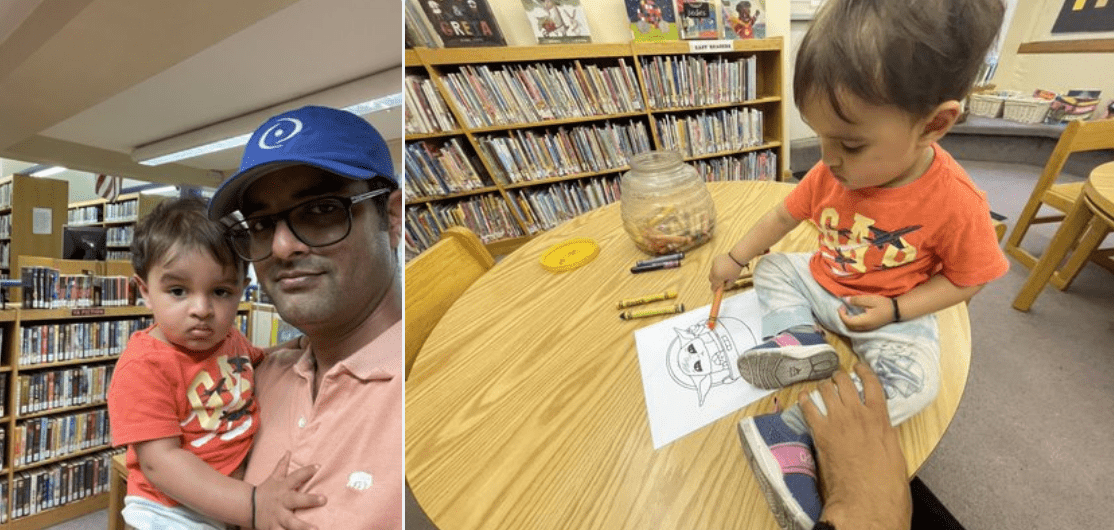
Then came Neil, my son, in late spring of 2021; and when he was a little older, we made our first visit to the library on August 13, 2022. The idea was to give to him what my mother gave me all those years ago, the joy of reading.
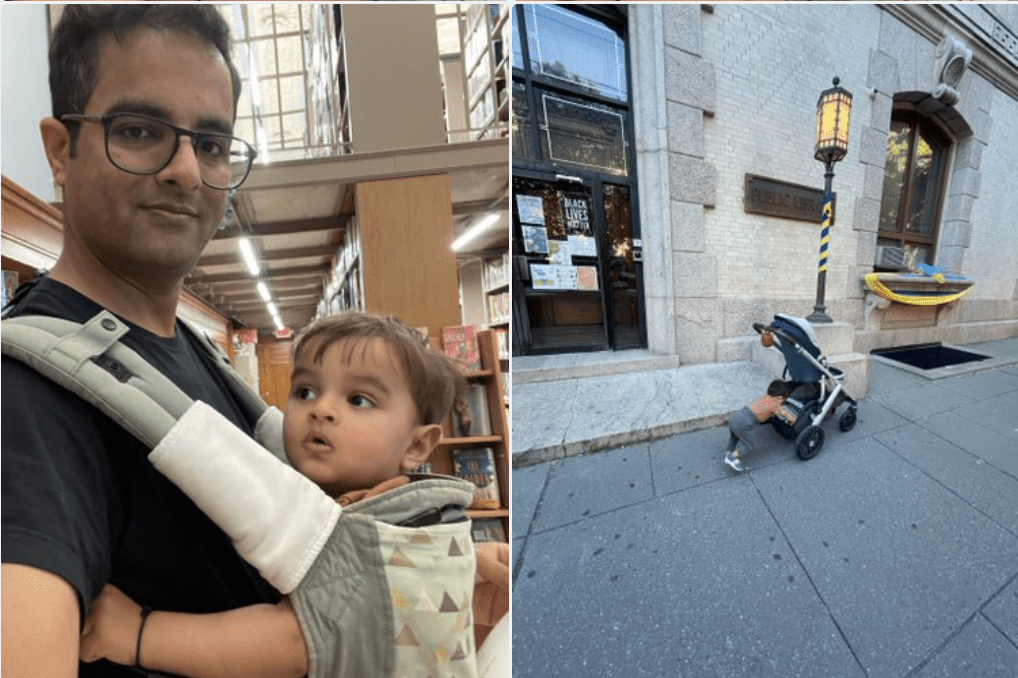
Got my library cards made, had a good time with neil and brought back nine books…
Little did I know then, that it will rekindle my relationship with reading books. I delved deep into non-fiction, self-help and personal development books. My opinion is that for entertainment, I might as well stream TV shows and movies – reading should lead to development.
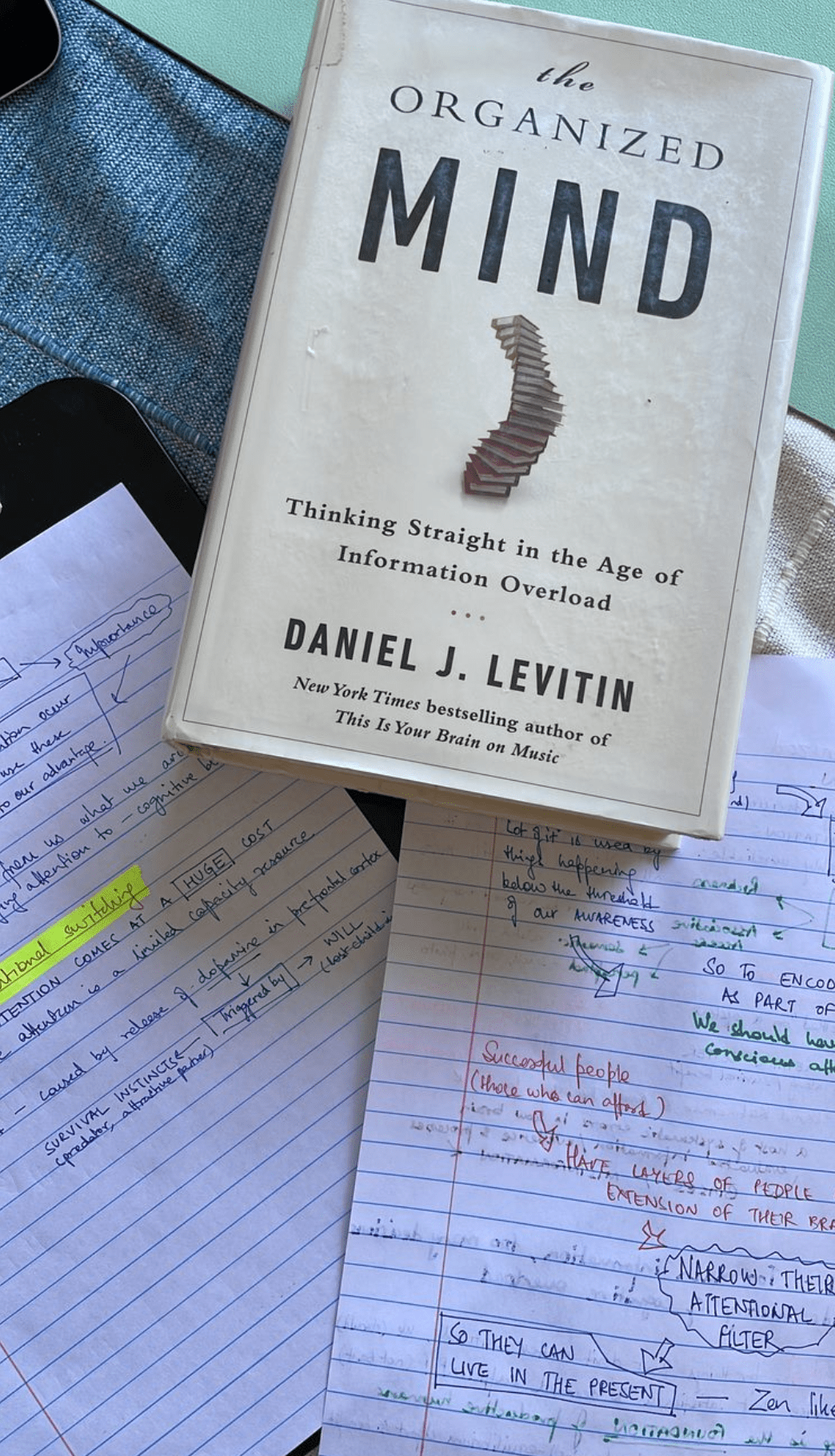
Library was a game changer, as abandoning books midway or skimming through them no longer felt wasteful. I started to skim through books, and then decide if I want to do a detailed read. Some that I liked a lot, I even made notes of the key points that appealed to me. I started to read whenever time permitted, and soon the reading habit started to edge out TV and movie streaming time. From the initial batch of nice books, five turned out to be good. I started using my newly acquired fountain pens and stationary to make lots of notes, and also scanned them for easy availability.
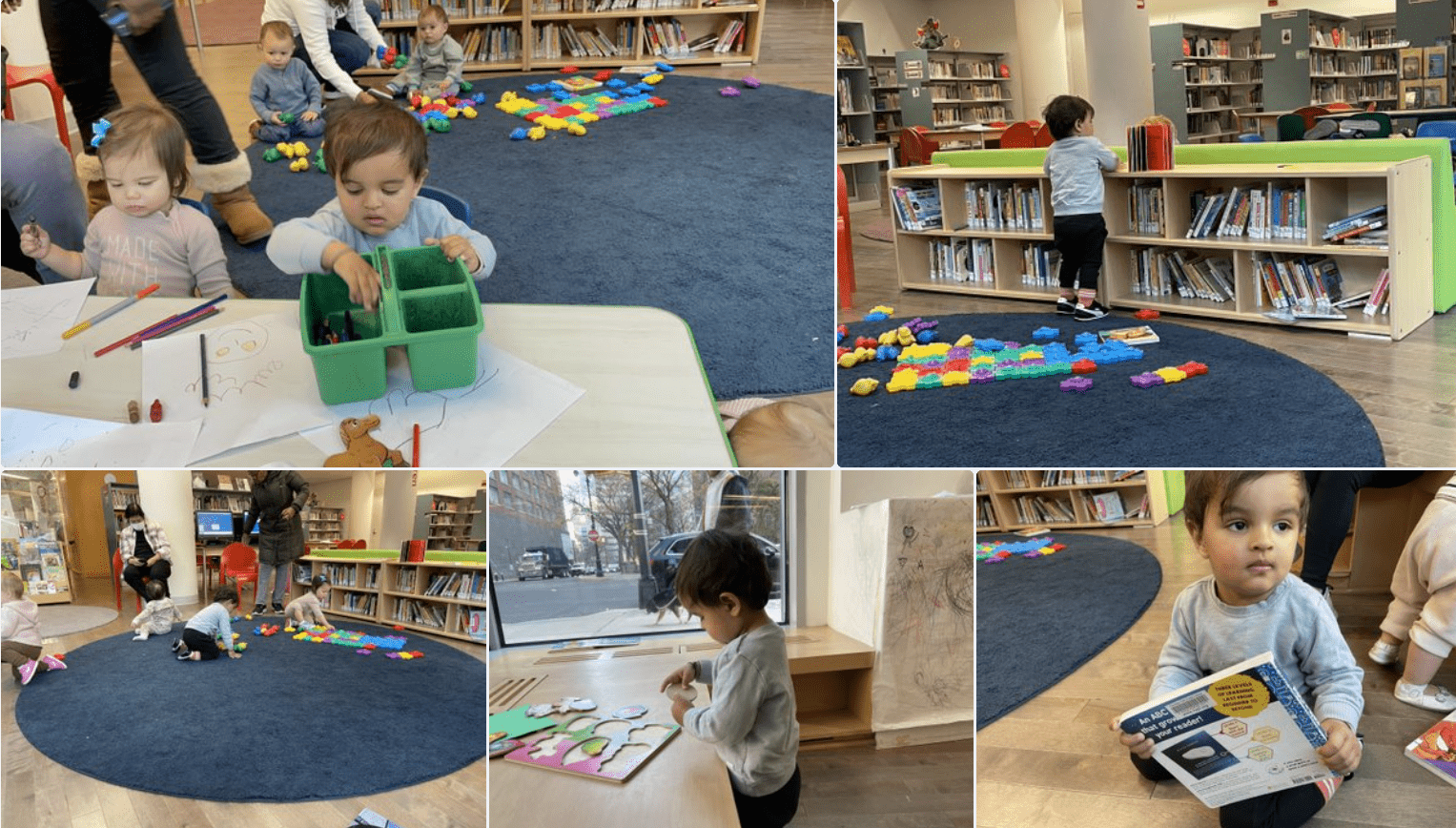
Meanwhile the library visits became a fun father-son activity, and its frequency became at least once a week, sometimes twice. The library at 8th Street (Pavonia Branch) had story time and fun activities like crayon coloring and toys for Neil, and with our frequency, every one knew us (or rather Neil) on a first name basis.
Then on October 1, 2022 – my first kindle paperwhite (7th generation) bought refurbished from woot.com because I wasn’t sure how much I would end up using it. Little did I know at the time, this would be a game changer. I set it up and downloaded all the amazon.com books in my account. It was a game changer BECAUSE – Jersey City Public Library allowed borrowing books on kindle. So you’d select a book from the library and it will get pusehd to your device for 14 days. It really removed the friction of going to the library to pick and return books. Plus the kindle was light and I could carry it everywhere.
Then, on November 18, 2022, we also became members of New York Public Library – which had a much bigger toddler play area, a wider selection of toys and it also increased the book selection for Neil and me.
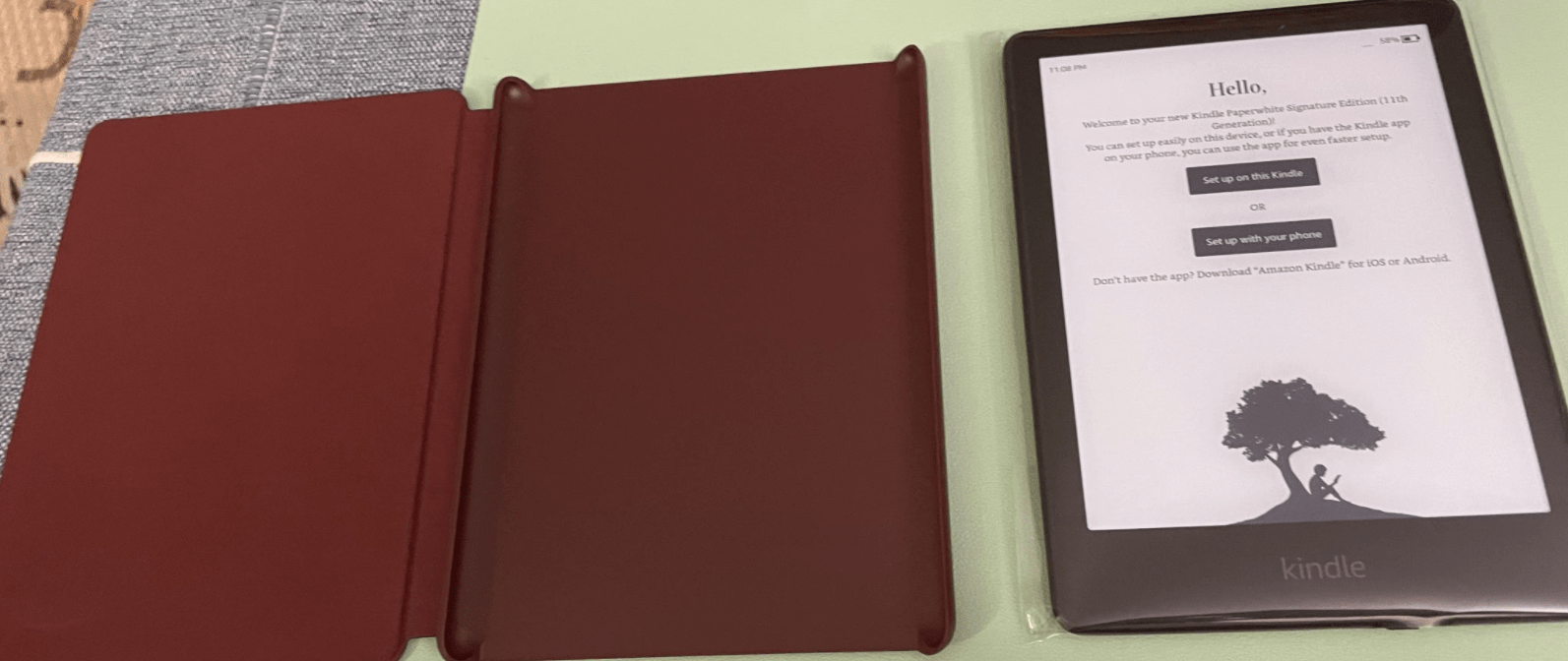
By now, I knew kindle paperwhite was a good fit for me, so for a change I bought the latest generation – Kindle Paperwhite Signature Edition (11th generation). The kindle arrived on November 22, 2022, and was awesome – waterproof, multi-led with warm lighting option and much higher resolution compared to the 7th gen, complete with a leather case.
Now with membership of two libraries (JCPL and NYPL), I had the option of paper books, and kindle books from both libraries. I was able to borrow multiple titles, skim through them and decide which ones I would like to read in detail.
And so… I fell in love with books again, and since then I am glad to report, the love has only deepened. On an average I read at least an hour a day, and sometimes more. While an hour doesn’t seem like a lot, when done consistently, it has allowed me to complete over 100 books since I joined the library in August 2022, to now (April 2024) when I write this!
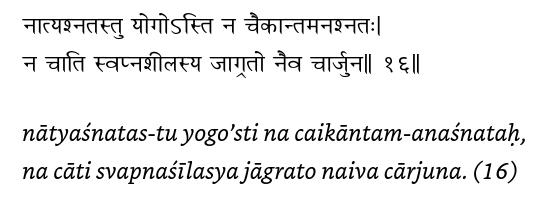
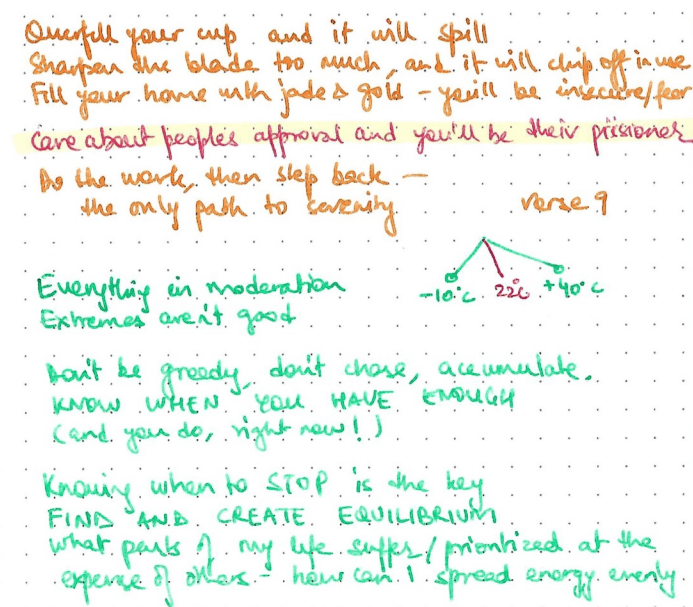
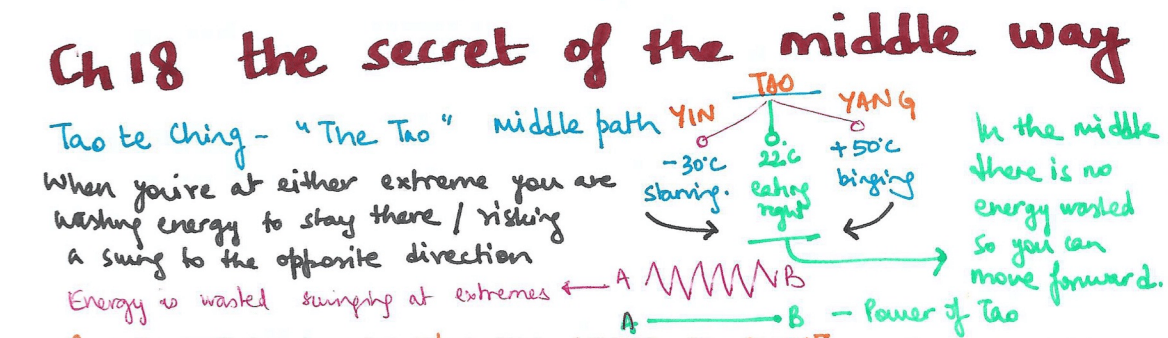
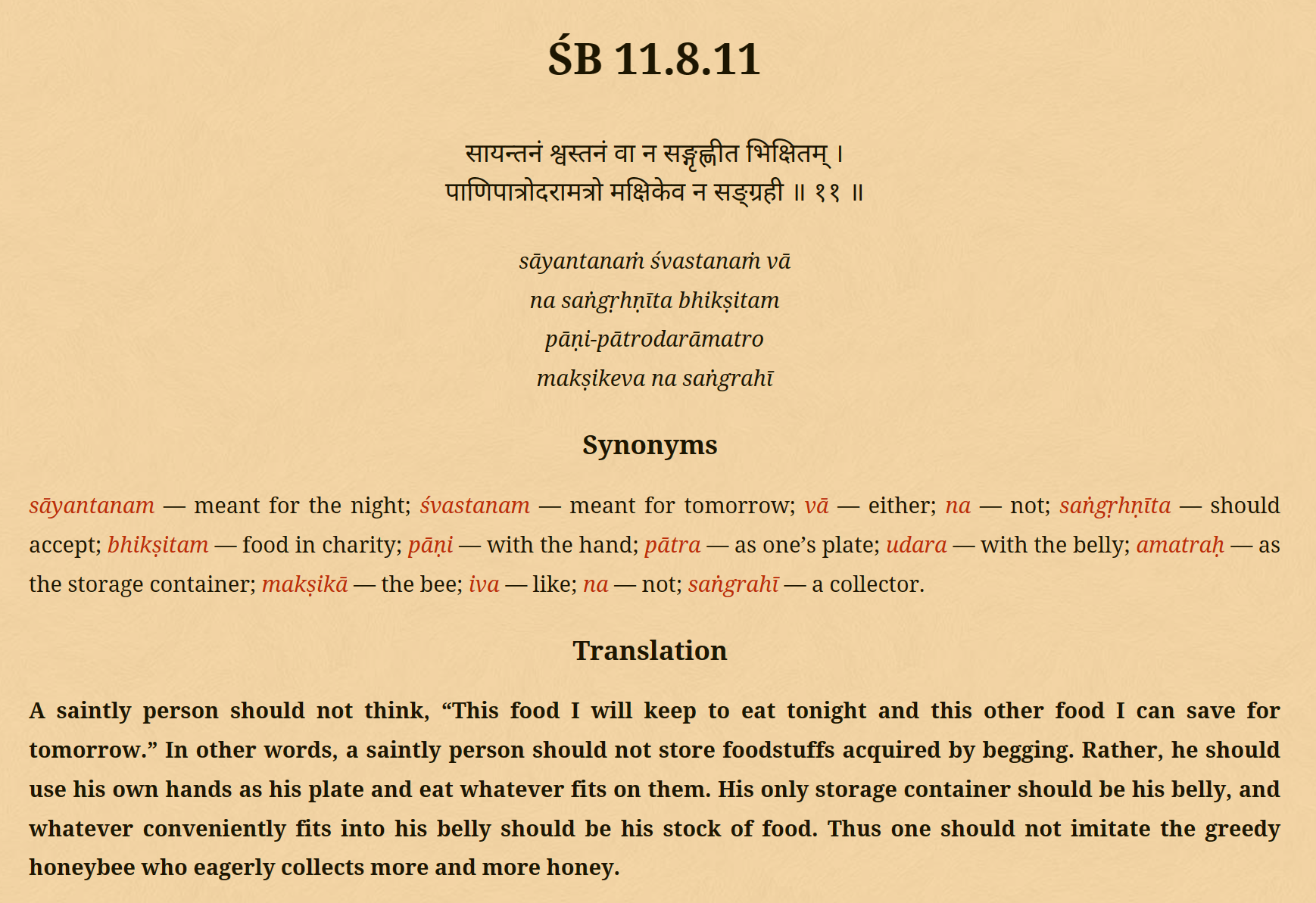
From my reading of Bhagavad Gita, Dhammapada, Tao Te Ching – following a middle ground is a key theme that has emerged – that is tread on a middle ground. Neither extreme austerities, nor indulgences are good for the body, mind or soul.
Bhagavad Gita Verse 6-16 – “Arjuna, those who eat too much or eat too little, who sleep too much or sleep too little, will not succeed in meditation.”
Dhammapada (Eknath Easwaran, Introduction)
In the forest, Siddhartha studied yoga – meditation – first with teachers, and then on his own, and finally practicing extreme austerities. In doing so he realized that his body was so worn down, however, Siddhartha discovered that he could no longer meditate well. His mind lacked the vitality for intense, sustained concentration. He changed course, and eventually attained Nirvana.
The “Middle Path” then became one of his core teachings. He taught this to student Sona, who in his overenthusiasm of spirituality was practicing extreme austerities. Since Sona used to love playing the vina (a musical instrument similar to Guitar), he took one to him after deliberately loosening its strings till they were limp as spagetti. He asked, “Sona, can you show me how to make music with this?” Sona took the instrument respectfully and fingered a few notes. Then he began to laugh. “Blessed One,” he said, “you can’t produce music when the strings are so loose!” “Oh, I see. Let me try again.” And he proceeded to wind the strings so tightly that Sona winced. When the Buddha tested them, all that came out was high-pitched squeaks. “Blessed One, that won’t work either. You’ll break the strings. Here, let me tune it for you.” He took the instrument, loosened the strings gently, and played a little of a haunting song. Then he stopped, for the music brought memories he was afraid to awaken. “It has to be tuned just right to make music,” he said abruptly, handing the vina back to the Buddha. “Neither too tight nor too loose. Just right.” “Sona,” the Buddha replied, “it is the same for those who seek nirvana. Don’t let yourself be slack, but don’t stretch yourself to breaking either. The middle course, lying between too much and too little, is the way of my Eightfold Path.”
Eknath Easwaran. The Dhammapada (Kindle Locations 527-535). Kindle Edition.
Tao Te Ching, and The Untethered Soul – Michael Singer Chapter 18
As an avid reader of non-fiction, personal development and self-help genre – I was familiar with a LOT of concepts that Michael talked about in the initial chapters, and due to that I was about to abandon this book after a first few chapters… but I am glad I did not…
“There is nothing new under the sun” – Ecclesiastes 1:9 NIV
This was said thousands of years ago, it’s in the Bible, and yet mankind takes what it has and connects it to create new stuff all the time. That is what Michael Easter has done in this really well-written book.
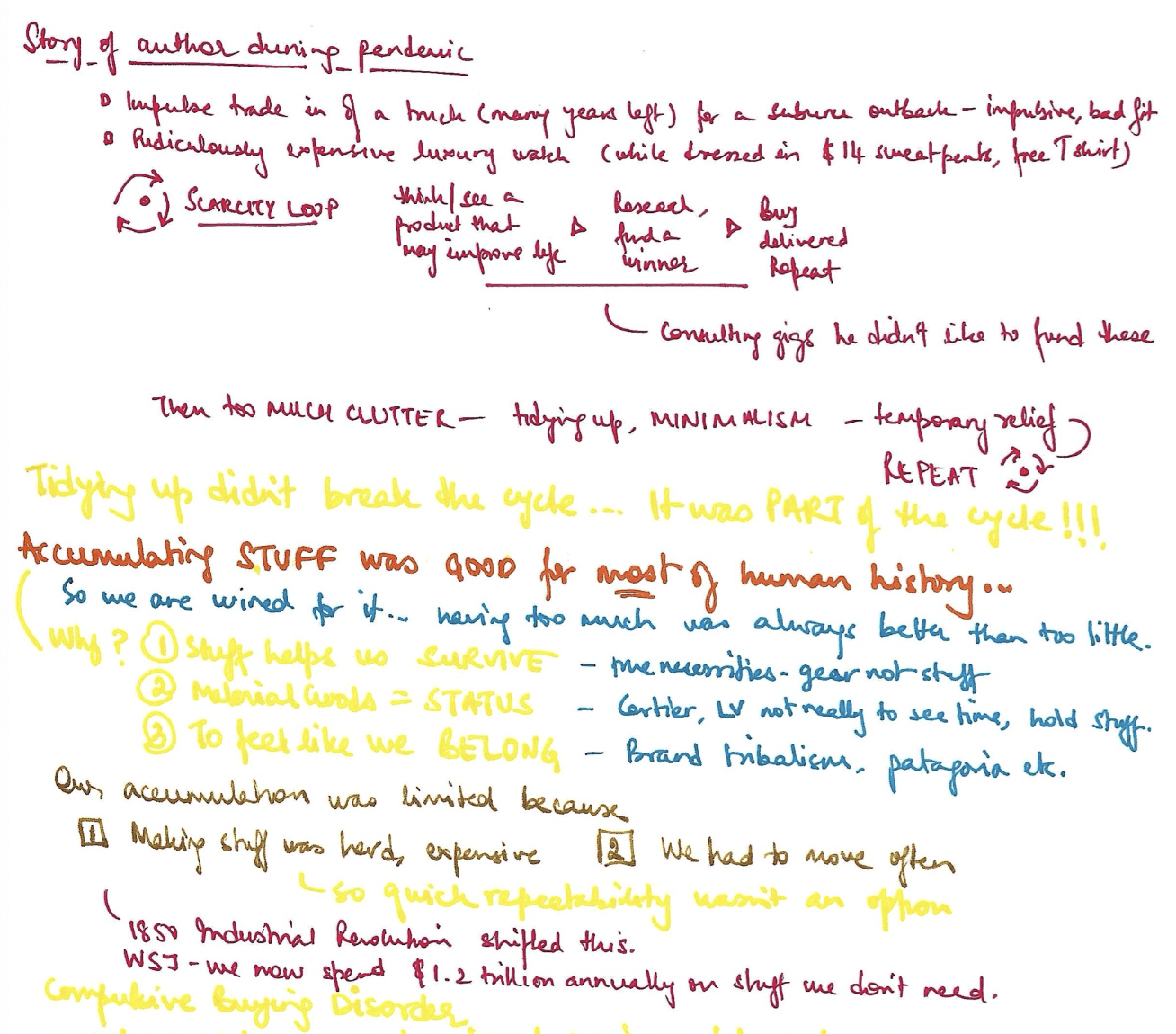
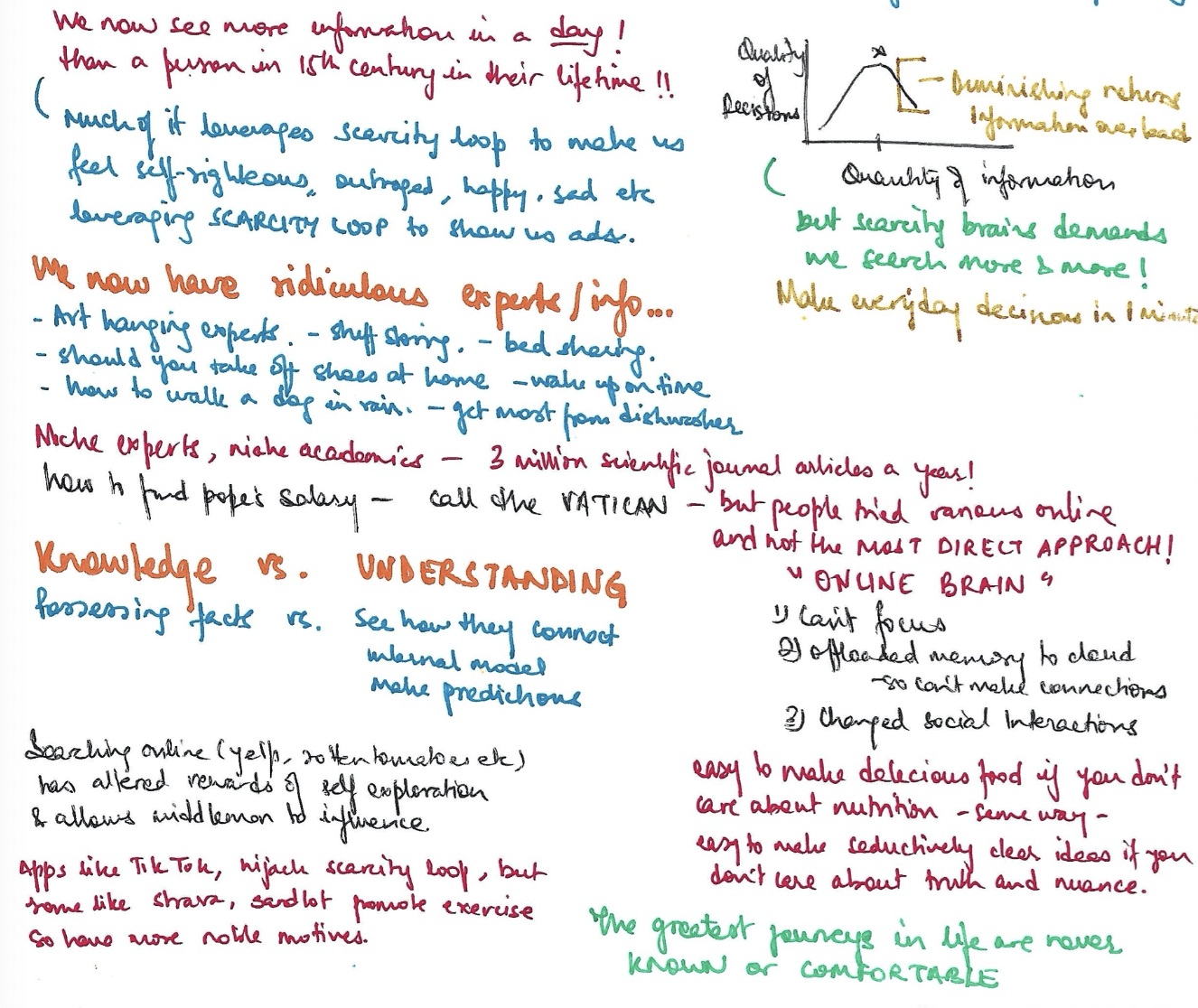
He first explained “scarcity loop”, and then connected it to our evolution from ancient prehistoric life, all the way to modern life. He connected it to various topics such as gambling, obesity, psychological tendencies to avoiding dealing with issues by using distractions, rise and misuse of social media, clutter, minimalism, information overload and happiness. He did so skillfully by weaving personal stories, scientific research and humor, making this book really enjoyable to read.
What made the book come alive were his personal examples. What’s turned out to relevant for me, may or may not be for another reader. But once you understand his core-premise (see summation below), you could jump to a chapter that interests you (e.g., food?). My recommendation, however, would be to read the book sequentially cover to cover.
Core Premise – “The Scarcity Loop”
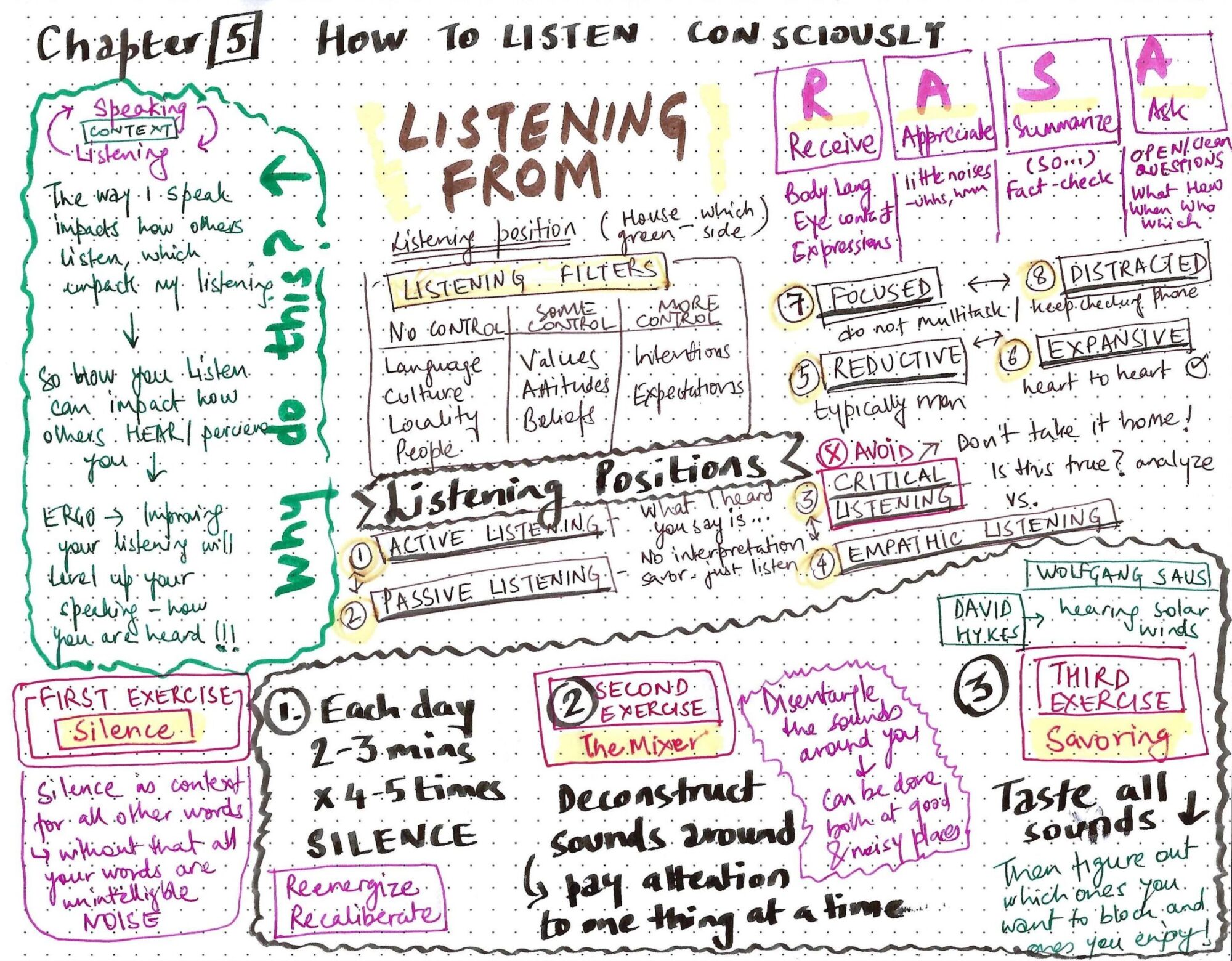
Some of my other favorite parts are given below:
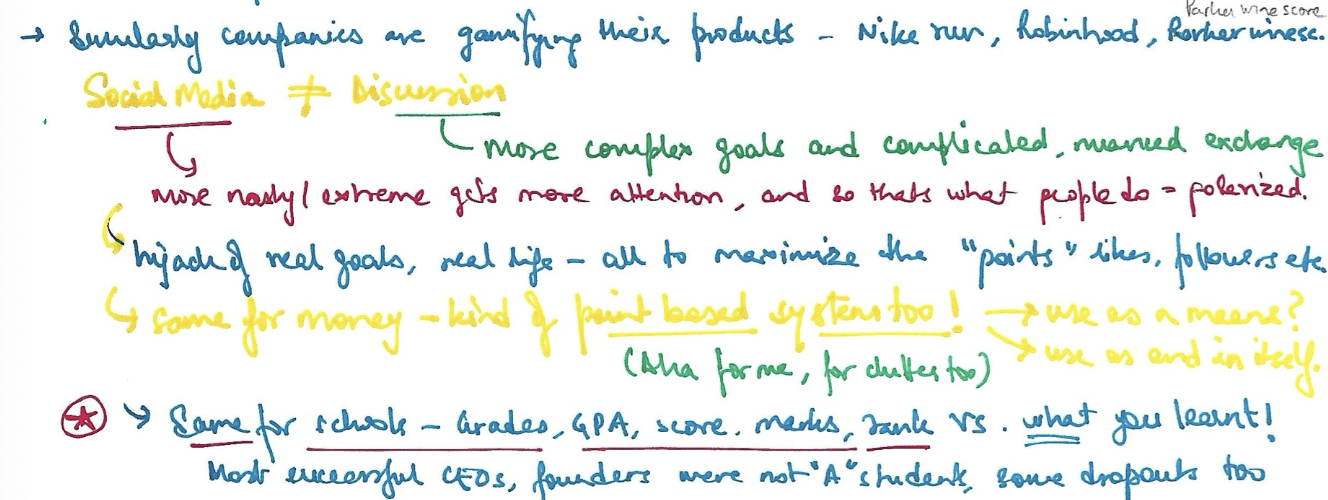
Chapter 6 gave me tips on how to raise my three year old kid – it explained how complex concepts like influence, friendships, learning are reduced to metrics – likes, followers, GPA – and then all people do is try to maximize the metric, and the core objective behind the metric takes a backseat. His personal story of how he enjoyed his hikes but once he got hooked to monitoring likes, he was always on the lookout for the best angle, and it took the fun out of his hikes.
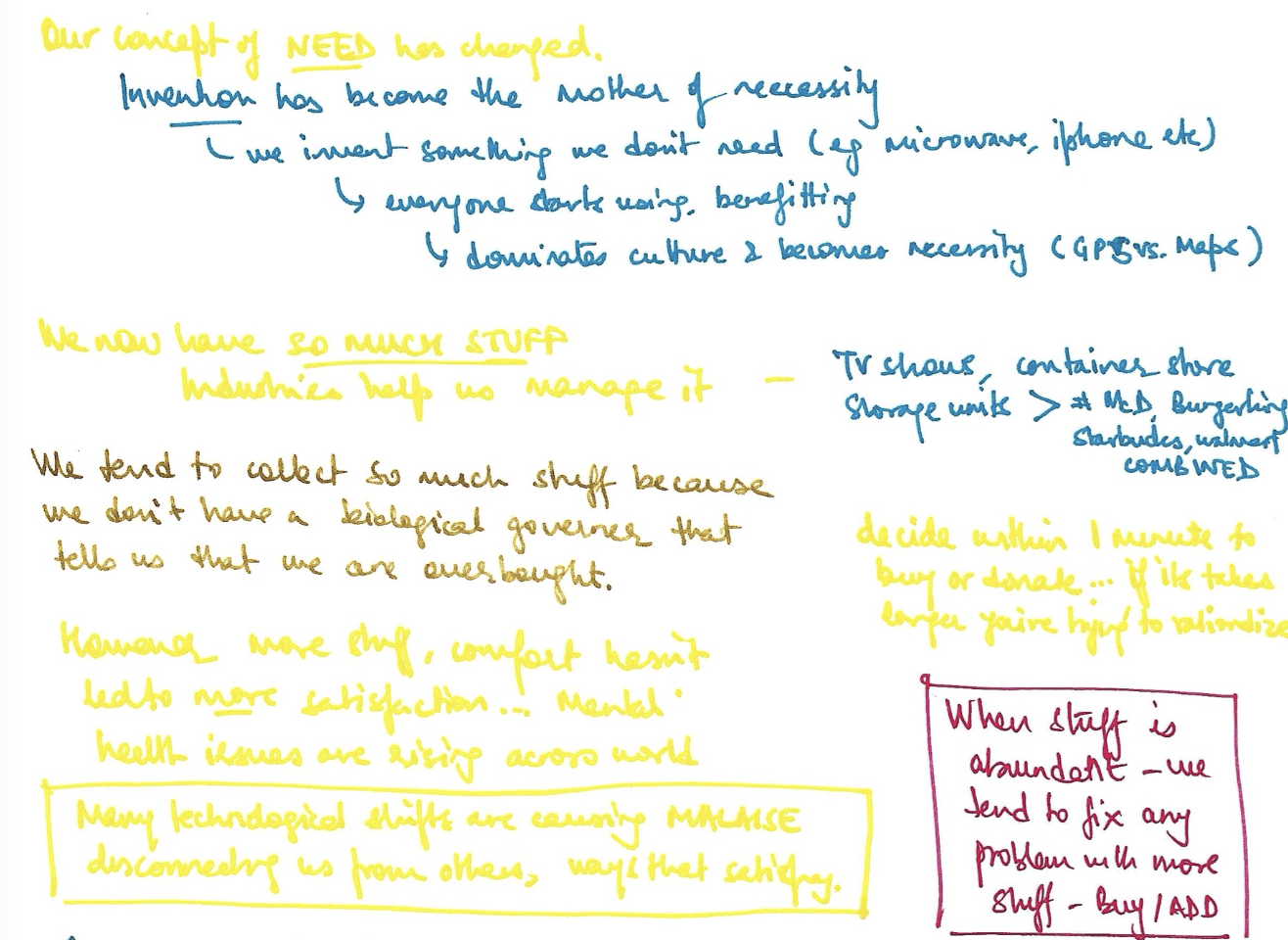
Chapter 9 – Stuff was the most rewarding for me – as it was almost custom written for me. Some of the things he explained he did – around impulse purchases, struggling with clutter and cycling between accumulation and purging cycles were very relevant to my life.
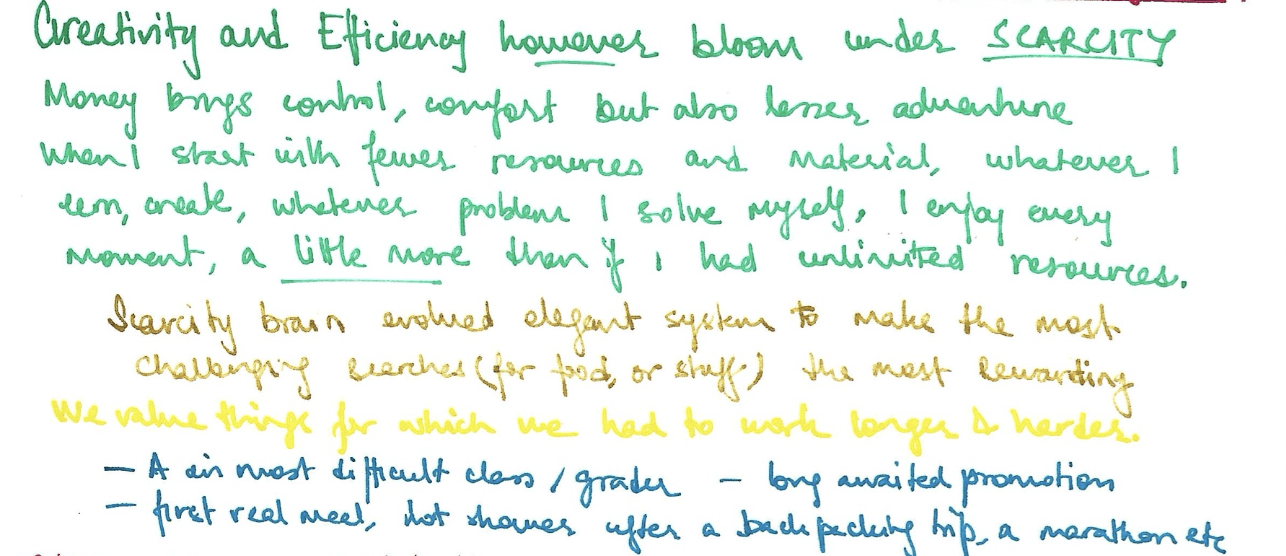
The he made one of the most brilliant point, that Austin Kleon also makes – Creativity Blooms under Scarcity. Growing up in a middle class family in India in the 90s, we had enough but not too much, and therefore we made the most of whatever we had. Everything was used till it fell apart, and often even then it was creatively repurposed. The first instinct for any problem was to improvise with what we already had. To some extent, the poor communities of India still do that, and lovingly call it “juggad”
His conclusion and line “GEAR not STUFF” has already helped me avoid impulse purchases and hopefully the habit change will stick.
Chapter 10, on how we humans seek information, and have shifted to doing so online was very informative, and witty – especially how he brought to light why some of the really random articles in prestigious newspapers like NYTimes – are about trivial stuff like – how to walk a dog in rain, how to get the best out of your dishwasher etc…
In all, a really well-written book. I immediately put a hold on his earlier book – “the comfort crisis” and can’t wait to review it. I have a feeling that it will be quite good too.
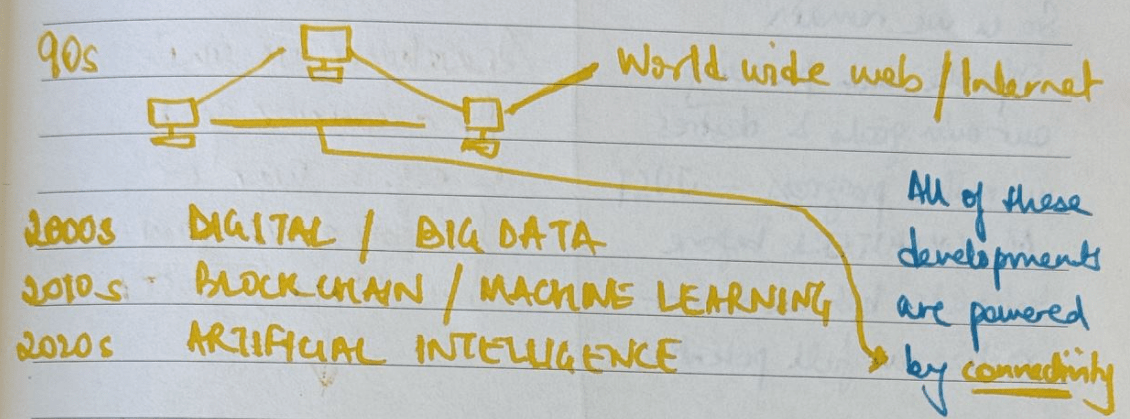
Computers were invented long before the internet, world-wide-web started connecting them together in the 1990s, and that really made them a LOT more useful. All subsequent innovations, digital, big data, block-chain, machine learning and now Artificial Intelligence was made possible by computers, physical eco-system and data connecting together as ONE toward a common goal (e.g., online shopping, gaming, ingesting data to learn etc.)
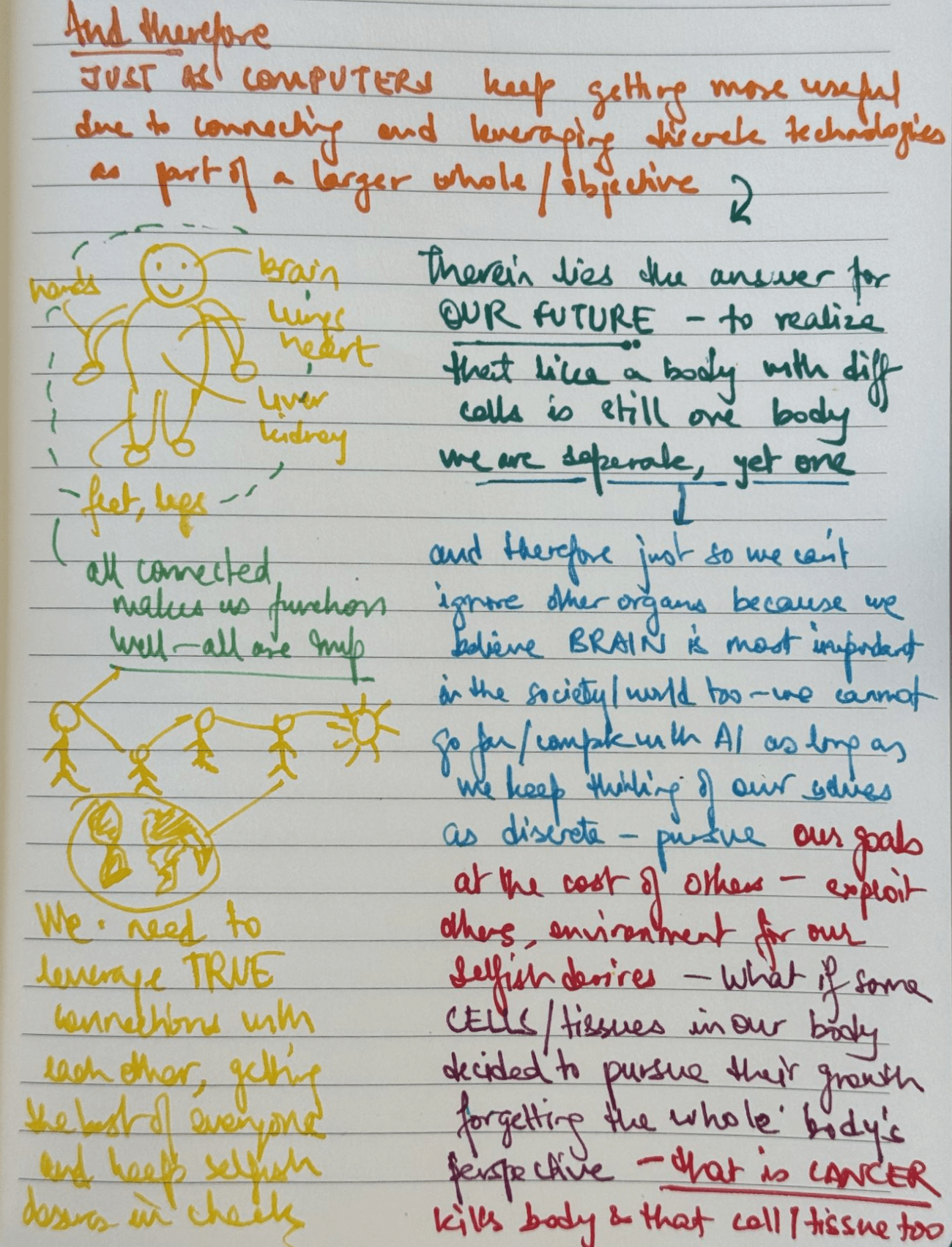
Therefore, a logical conclusion can be that when things, people or data – connect for a common purpose – they can often create value that is greater than their parts.
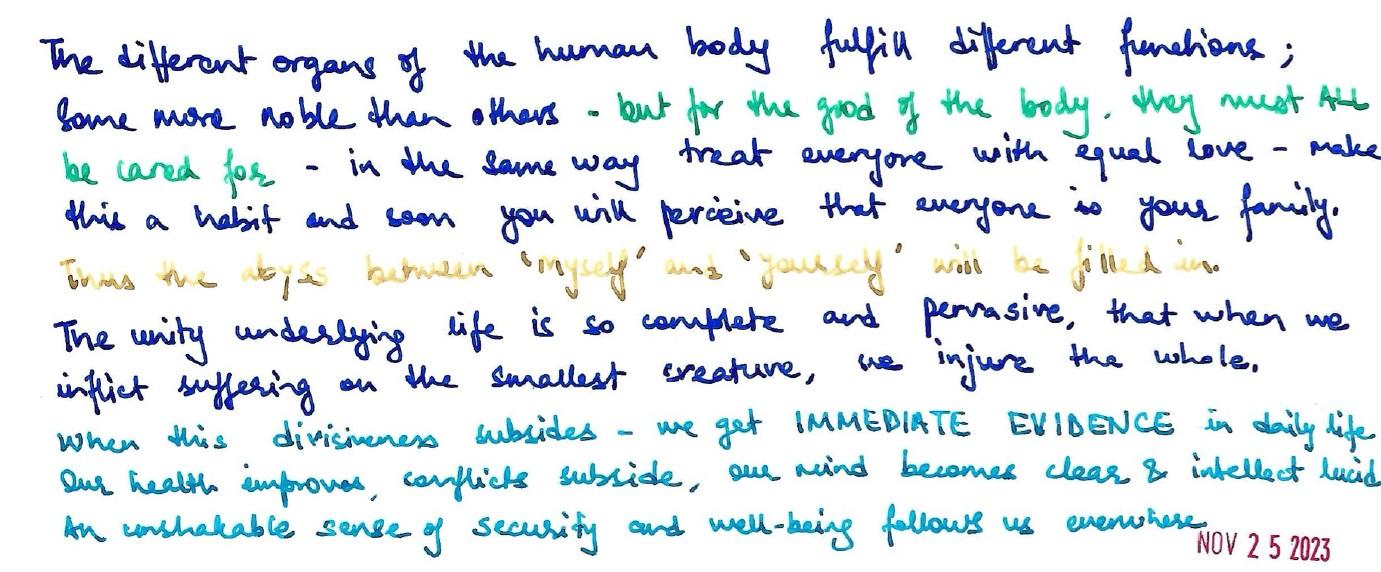
We see this happen in a human body as well – each cell, tissue, organ has its own unique purpose, but the body functions optimally only when they work in unison. Therefore, thinking that the brain is more useful than say the large intestine and the excretion organs can be easily proven wrong by observing someone with chronic constipation or diarrhea.
So therefore, we can also now come to another conclusion, that while each individual unit in an ecosystem, business, or living body has its own function, it would not be beneficial to just focus on few (e.g., brain vs. rest of the organs, a visionary CEO vs. his employees etc.). So, this now starts to point to the power of a unified whole, or spiritually speaking – ADVAITA, and in that lies the key to how we can not only survive the age of AI, but thrive in it…
Our whole species has achieved wonderful feats when it TRULY connects for a common purpose for example, eradicating polio, smallpox, reach moon, mars etc. We also defeat evil by joining forces and making sacrifices. So, to thrive in the age of AI – we have to realize the power of connecting with each other, making the best of use of everybody’s capabilities – without looking down on certain jobs and skills – or considering anyone unworthy.Like our body analogy pointed out, even the most “unworthy” part of the body – if not functioning properly, or injured will make the entire body suffer, the same holds good for the world.
We may understand this at an intellectual level, but are we implementing what it means?
It would seem that most of us at an individual level, and sometimes even at a level of a country, seem to operate separately, pursuing our own personal or national goals – even if that is at the cost of other individuals or countries. In doing so, not only do we forgo the latent power of working as one, but we also bring about harm to the world as a whole.
Going back to our body analogy – what if one set of cells or tissues decided to go their own way and keep growing themselves with a disregard to their place or function in the body. The result may be very bad for the body (e.g., cancer) and eventually that tissue which was “winning” by relentless ambition and growth in the short run.
These “computers” and AI – in part are so powerful not only because of “connectivity” but also because they do not have “EGOs” or “self-wills” – they are put together for a purpose, and then they work single-pointedly towards that purpose. While it is easy for them to do this (because duh! they are machines), we can at least attempt to reign-in our “ego” – starting at an individual level but aspiring to also do that at a country level. We can then attempt to see the bigger picture – our world as one connected whole – and our role in it.
This realization can help us thrive not only in the age of AI, but also all future ages…
The newspapers are full of horrible world events. Walking on NYC streets shows homelessness in full display and disparity of income is on full show back home in India.
Could there be a panacea to all of these very real problems?
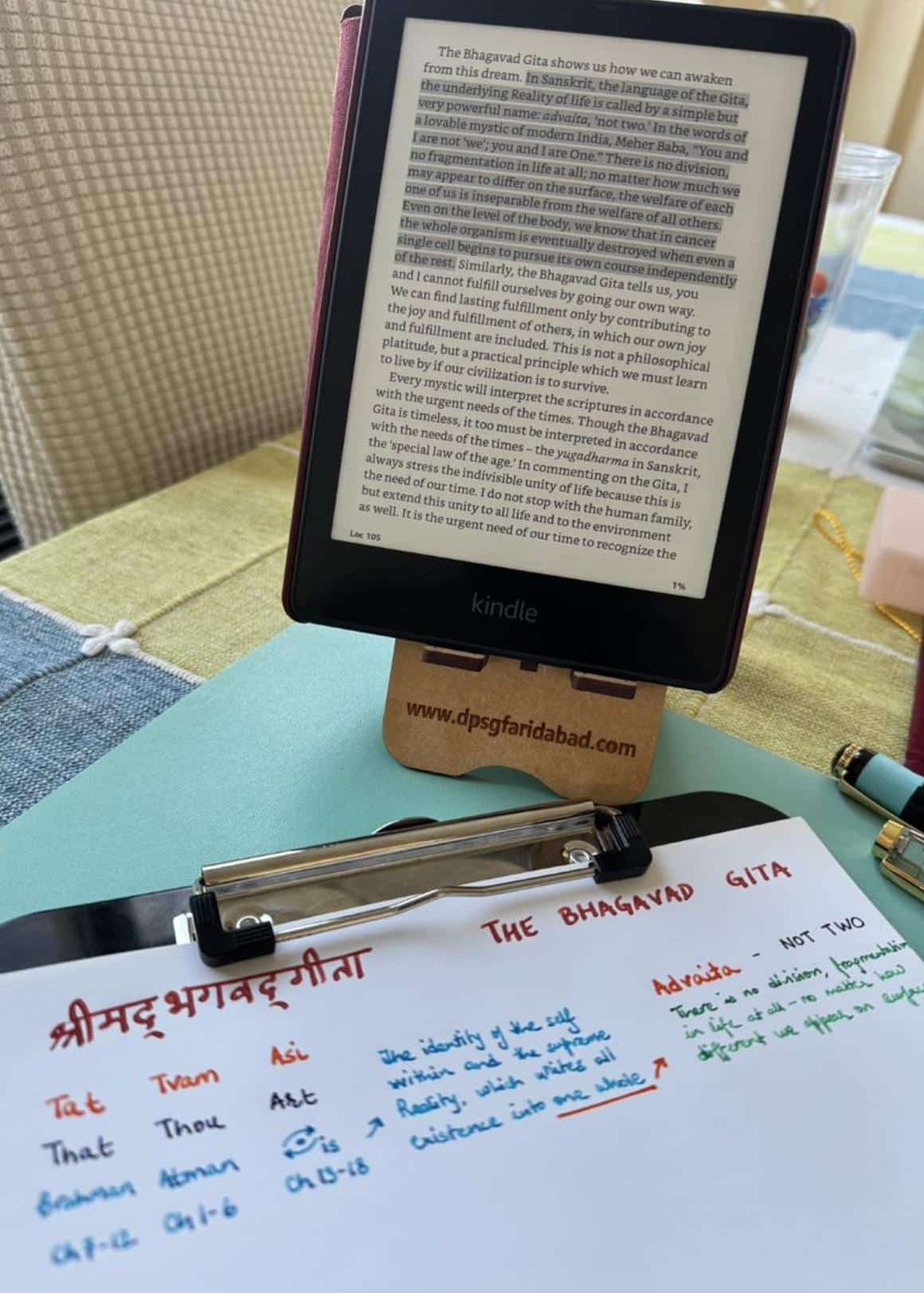
Going deeper into spiritual teachings of Hinduism, Buddhism, Tao Te Ching, and Christianity, it seems that there is an obvious solution. Its best summarized by the Sanskrit word Advaita – or – non-dualism – and that there is no division, fragmentation in life at all – no matter how different we appear on the surface. (Sources cited at the end of this post)
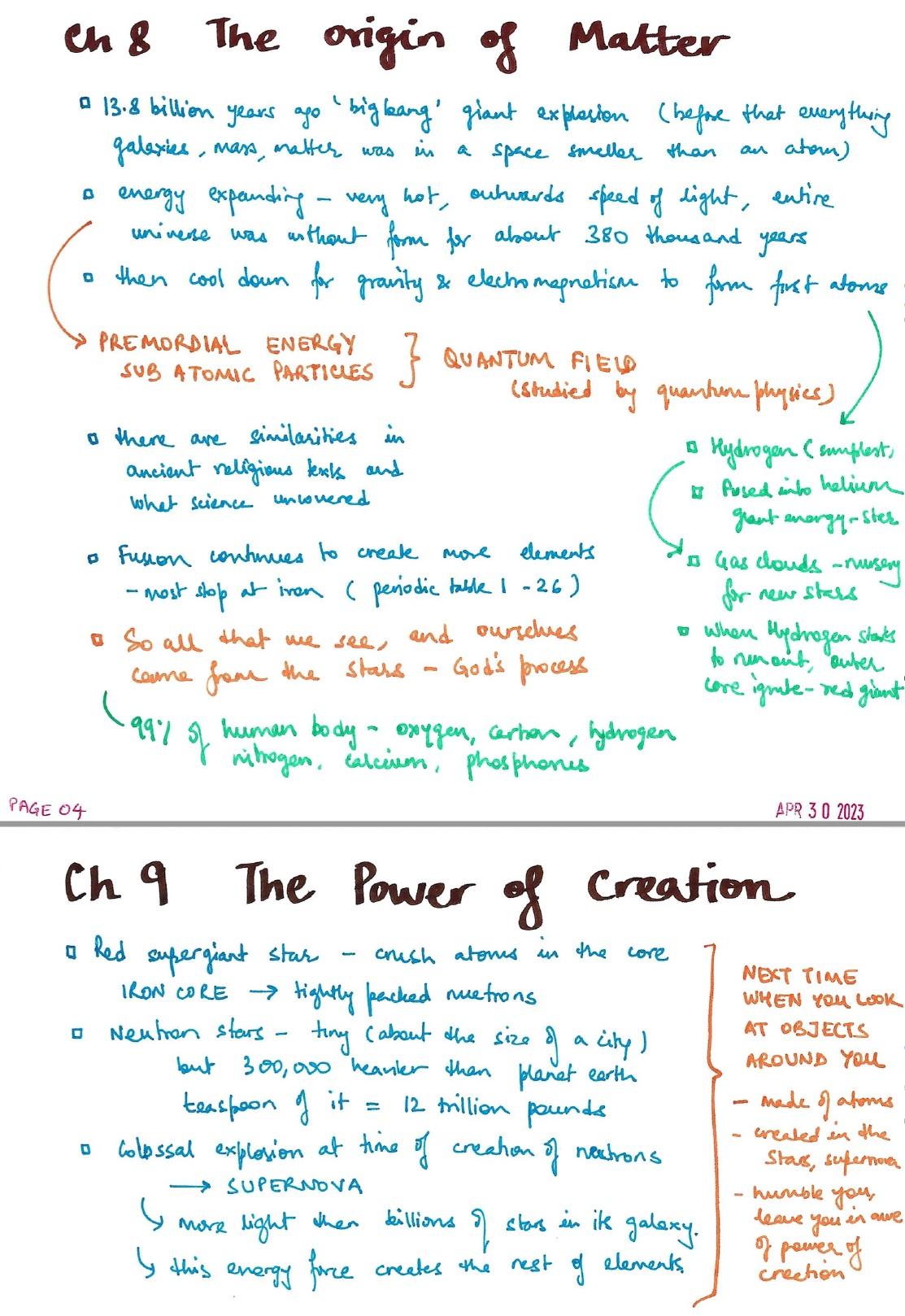
Let’s start with established science at the moment: 13.8 billion years ago, before the “‘”big bang” giant explosion – everything that exists today, our entire universe, matter – was in a space smaller than an atom. So even science agrees that there was just that one particle to begin with. Then, the “big-bang” happened, and energy started expanding – the entire universe remained formless for about 380 thousand years, and then started to cool down – where gravity and electromagnetism formed the first atoms – Fast forward billions of years and EVERYTHING that you see, including your own body – came from that single source…
Now think about your own body – trillions of cells, fuse to create organs, each with a different function, some more “important” than others – if you want, and sometimes doctors need to, you can see them as separate but for all practical purposes, in day-to-day life, they function as one whole. If few cells decide to go their own way, it wreaks havoc on the body, also known as cancer.
Our world can be visualized similarly – where everything – humans, animals, plants, fish, oceans, mountains, etc., appear as separate entities – but function together like our body does. What then happens if a particular species (e.g., humans), or groups of humans decide to go their own way? With all these wars, and human sufferings, “dualism” insulates us from the suffering, because its faraway, and we numb ourselves with distractions such as binge watching, scrolling and fast food, pretty much like in early stages of cancer – a patient does not notice any problems. But overtime, the damage increases, comes closer to home impacts us directly and we sit up and take notice, and hope it is not too late.
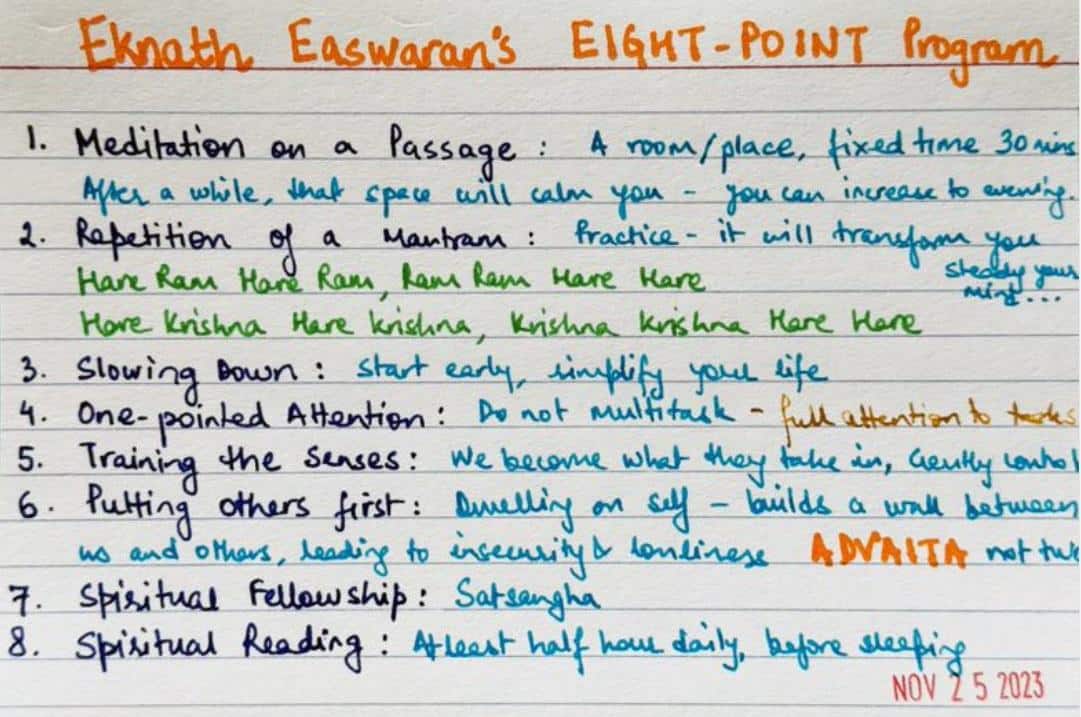
Dwelling on our “self”, or ego, and thinking of ourselves as “separate” from others creates a wall between us and others, leading to a feeling of insecurity and loneliness. To test this theory, I will start to treat everyone with equal love and care, putting their needs first (or at least equal), and starting with immediate family, moving on to friends and then work colleagues, neighbors etc. According to “The Bhagavad Gita” and my spiritual teacher, Eknath Easwaran (1910-1999)‘s commentary on it – this selfless action will diminish my ego, and soon I will perceive that everyone is my family – and with that, the abyss between ‘myself’ and ‘yourself’ will be filled in.
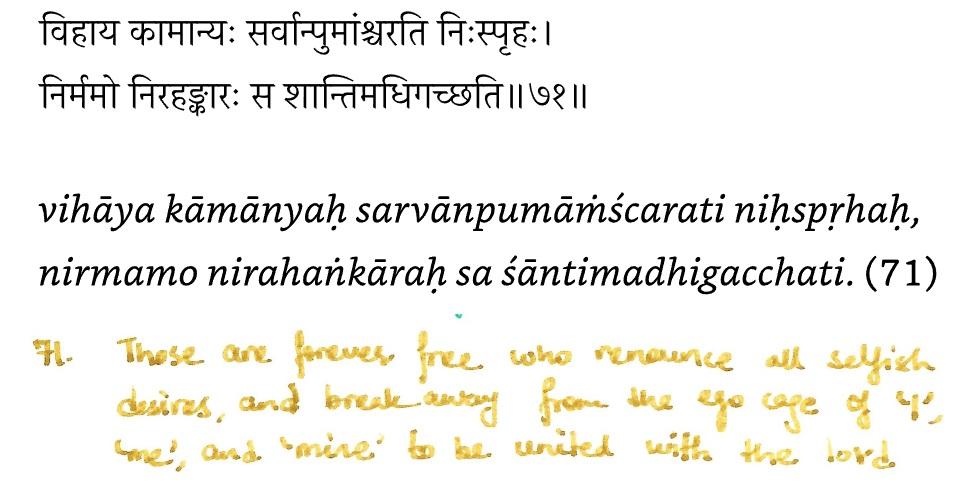
This is also recommended by Sri Krishna, in The Bhagavad Gita (2-71) – “Those are forever free who renounce all selfish desires and break away from the ego cage of “I”, “me” and “mine” to be united with the lord. You do not have to be Hindu, or even a believer in God to understand this – so for those who would only believe “science”, just replace “lord” with that primordial particle that existed before “big bang” – from which everything got created.
So, the hypothesis is – that we are all ONE, and to test it, I will live the values from my spiritual teacher, through his many books, especially his translation of and his detailed commentary “The Bhagavad Gita for Daily Living – Volumes 1-3” – Starting with implementing his eight-point program, and meditating on Advaita, specifically #6.
Having read so much about the benefits of journaling, I decided to give it a shot. Today, I started my third journal, having written for 157 days… Nov 1, 2022 to April 6, 2023.
Journaling is a deeply personal exercise, and each person does it differently. My journals are for the most part, activity logs. I summarize what I did each day, key metrics (e.g., sleep, screen time, exercise) and key highlights (e.g., wins, disappointments, learnings).
Initially, it felt like a waste of time. Questions like – who am I writing this for? What is the end-game here? That changed after I read Ryder Carroll’s Bullet Journal Method. While I did not adopt most of his recommendations – the one about “migration” really worked well for me. For me, migration is pausing, reflecting on your entries and identifying patterns. You can do it at whatever frequency you choose – I do it every 3 weeks, and then when I finish a journal. This review helps me learn my patterns, see what works well and what does not.
One of my favorite quote is from Annie Dillard, “How we spend our days is of course how we spend our lives“. Reviewing my journals helps me live intentionally. We are familiar with the power of data analytics – well, to harness that power – you got to have “data” first – and journals provide just that.
After reading so many books on creativity (Austin Kleon’s Steal like an artist, Show your work and Keep going, and Matt Richter’s Inspired) – I should know better… However…
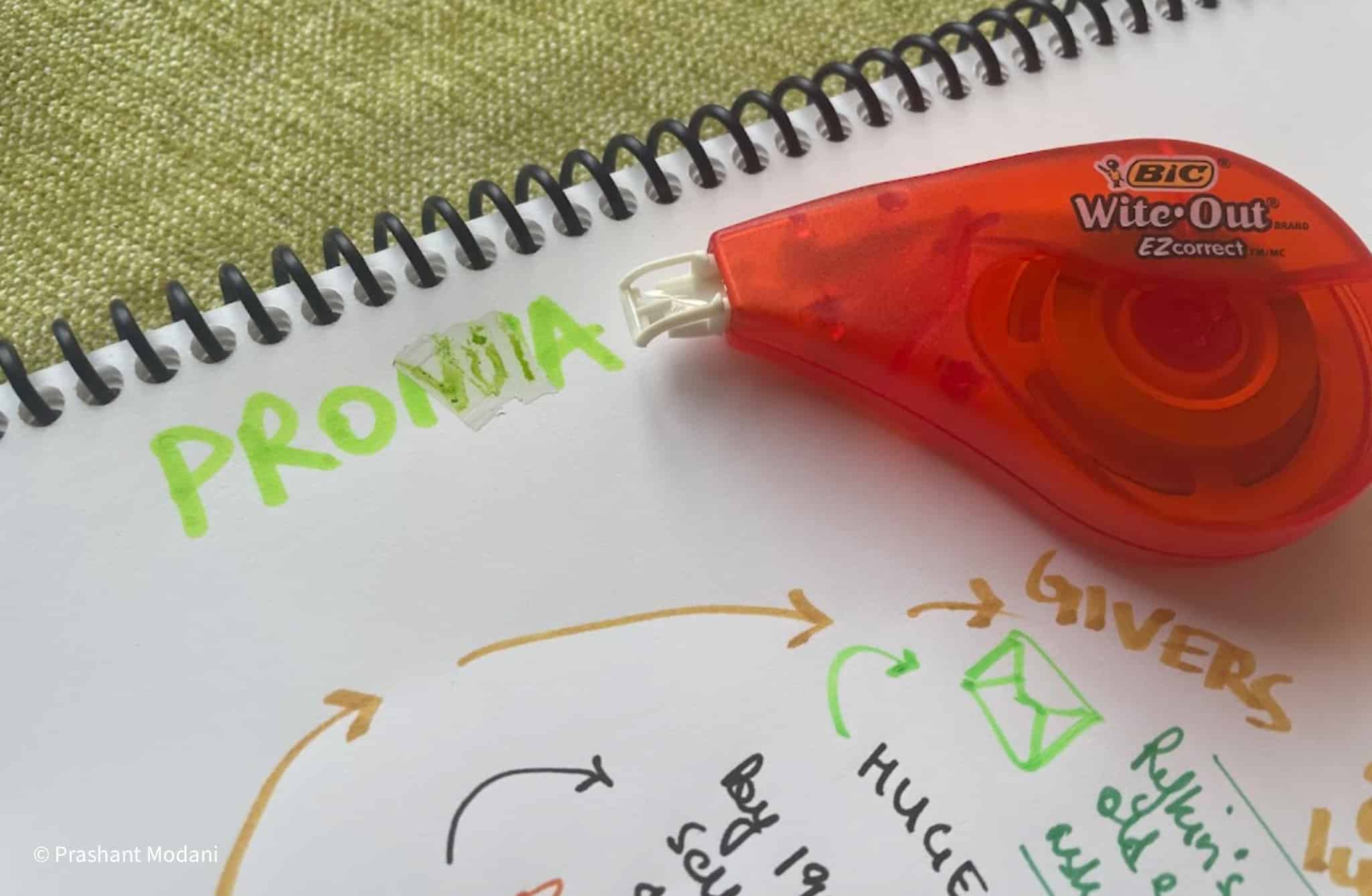
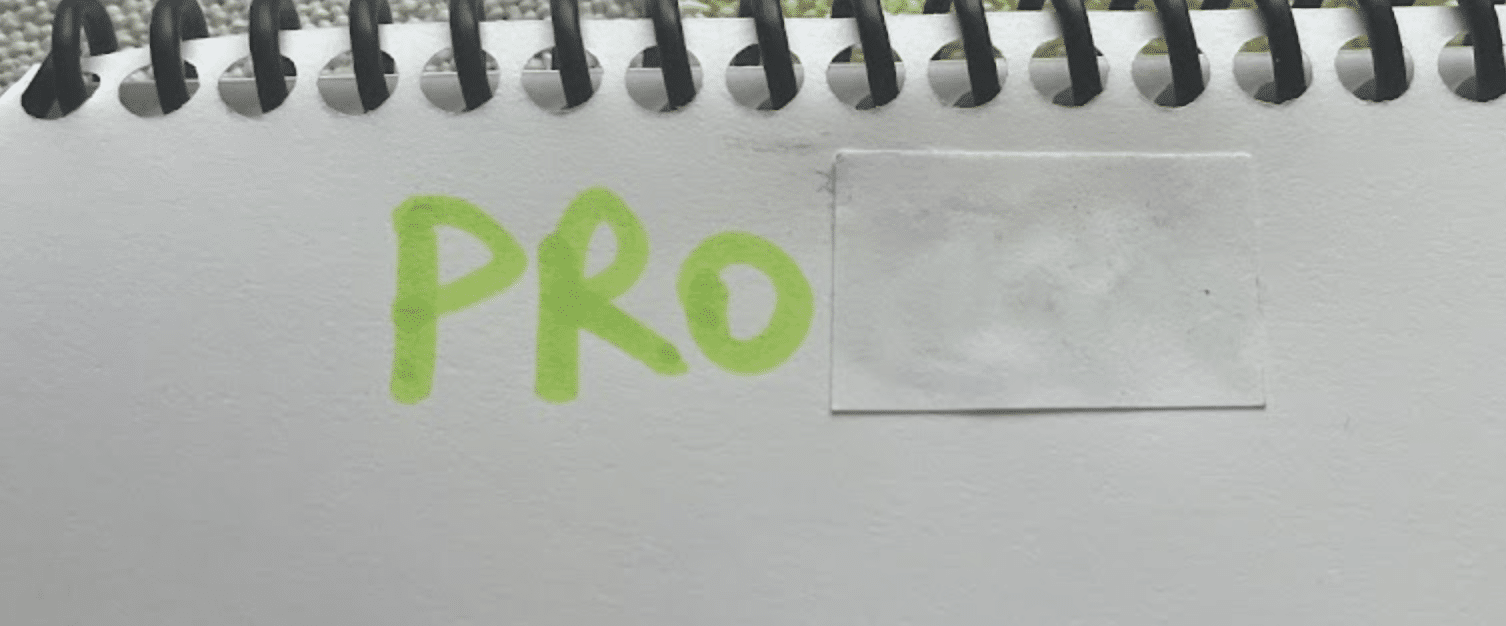
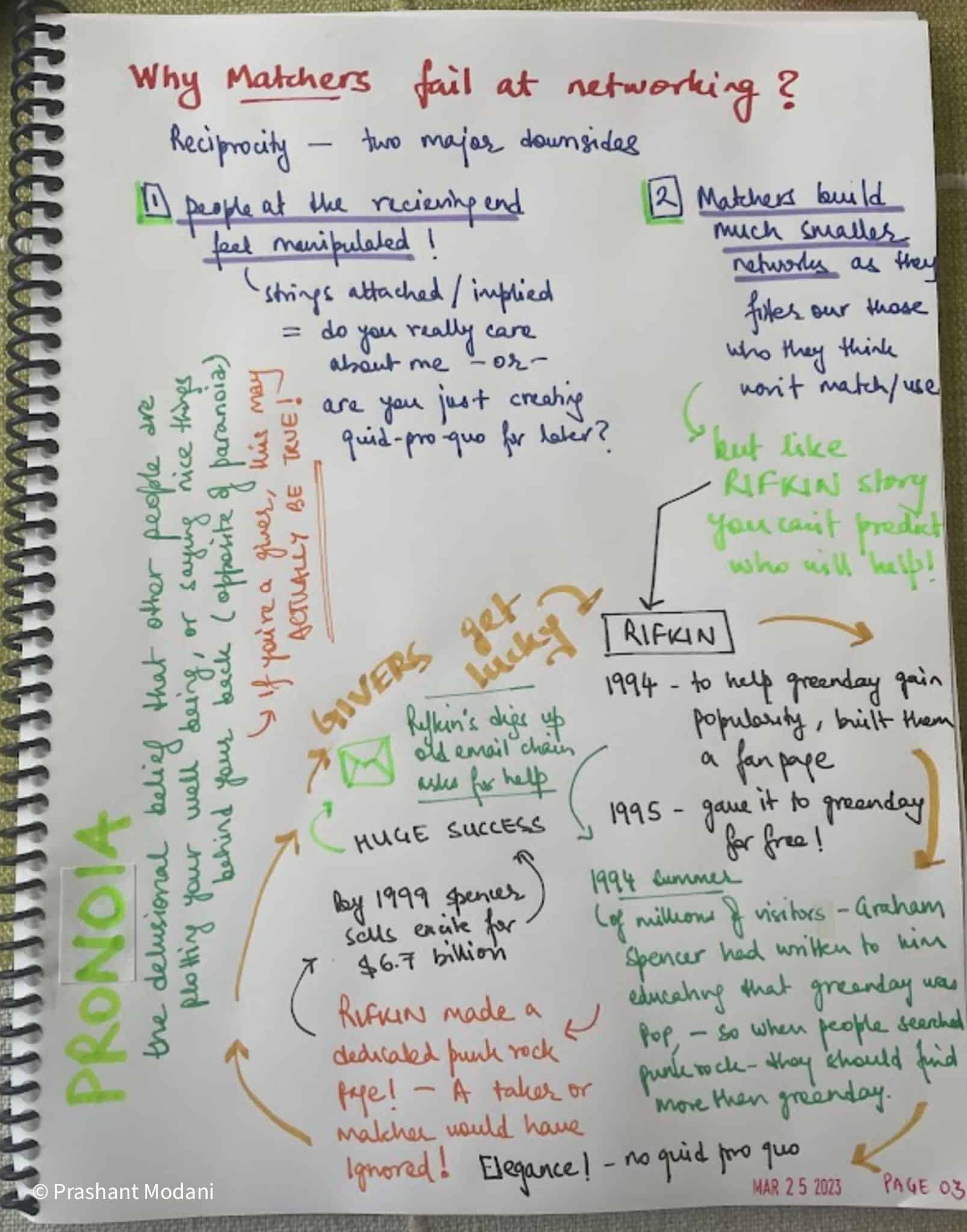
Recently, when I made an error… I first tried to use wite-out, but was not happy with the resultThen, I tried to cut a small piece of the paper and use glue to paste it on the error…and then… I let it dry for a few seconds…Voila! Error overwritten… and didn’t throw away the whole page… so some progress! However, real progress would have been to just strike the error out, and keep going… or better still, live with the typo (missing 2nd O)
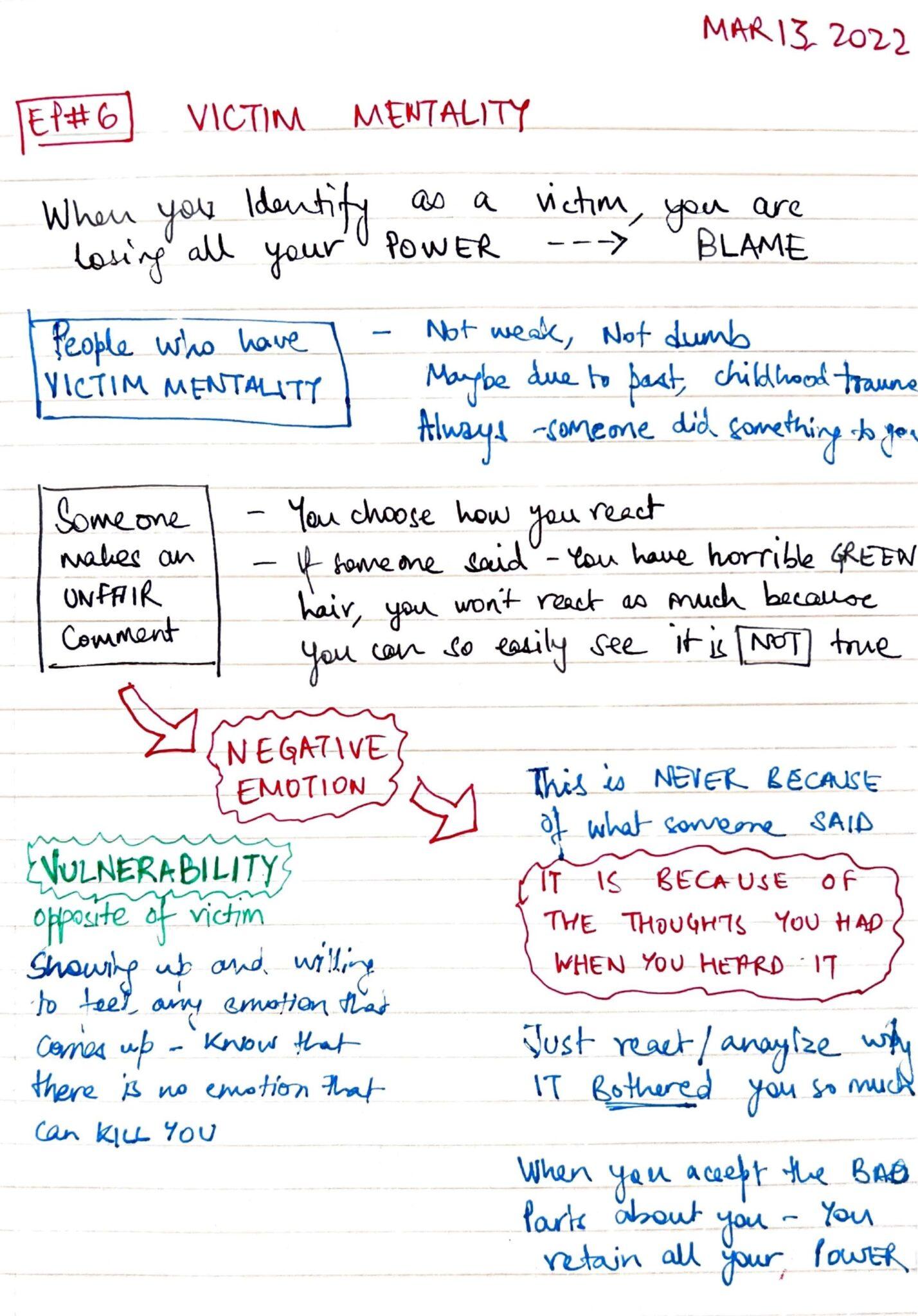
There is nothing wrong with having the victim mentality, it is quite comforting! However, with it one does lose all their power, because, well, they are a victim! Brooke Castillo’s Podcast (Episode 6) helped me relearn what I already knew from life experiences and books. Summary below, but I do listen to her, if you have 33 minutes.
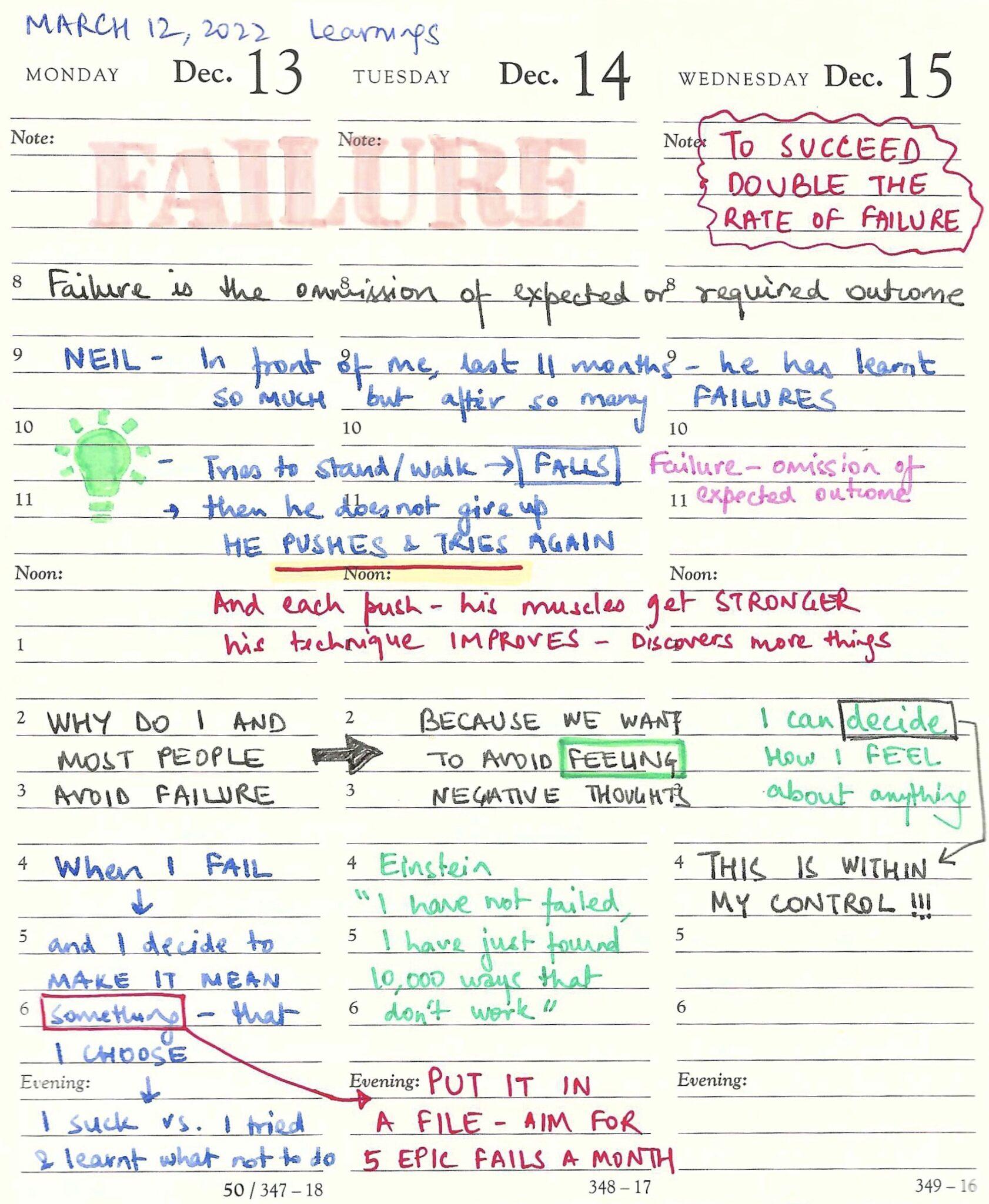
I have so many interests – at work and in life, which I never ever try – to avoid making a “fool” of myself. Like this site, for example – didn’t make it because – who would want to read or view it? Won’t people just judge? These thoughts, fear of failure! stopped me!
Then, episode four of Brooke Castillo’s podcast gave me the aha moment! Her unique way of teaching makes everything so simple! If you’re in a rush, my notes below summarize key takeaways, but if you have 27 minutes, I recommend you use the link above to listen to her.