The Middle Ground

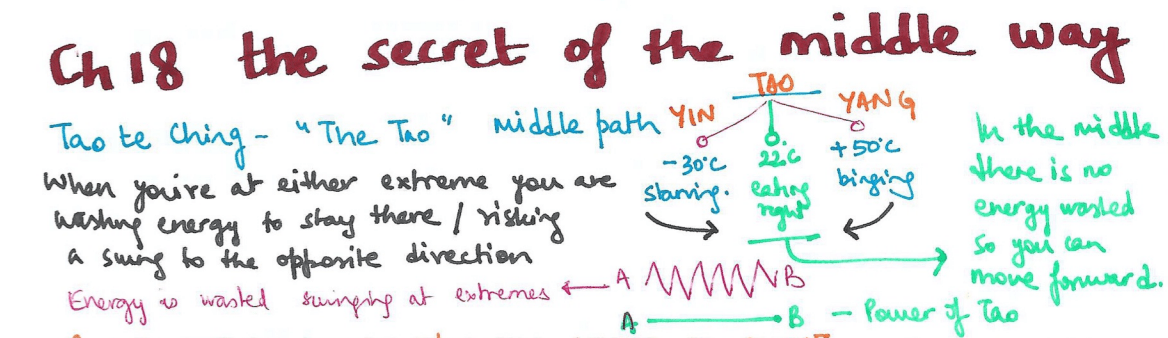
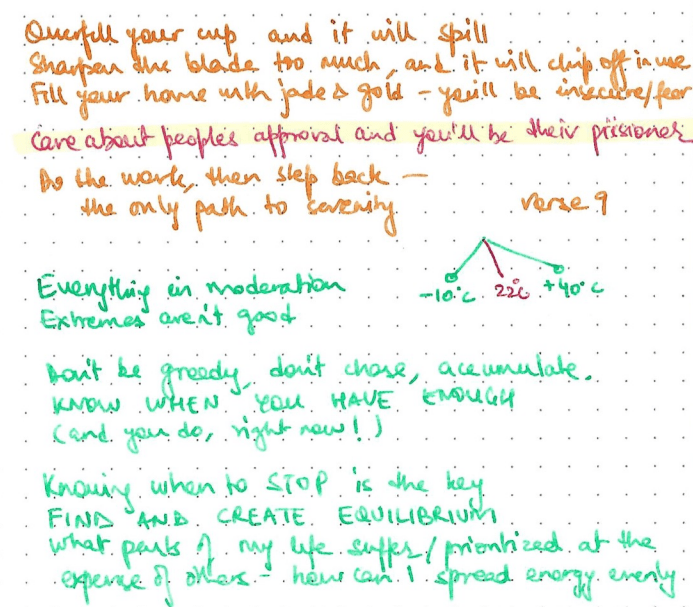
From my reading of Bhagavad Gita, Dhammapada, Tao Te Ching – following a middle ground is a key theme that has emerged – that is tread on a middle ground. Neither extreme austerities, nor indulgences are good for the body, mind or soul.

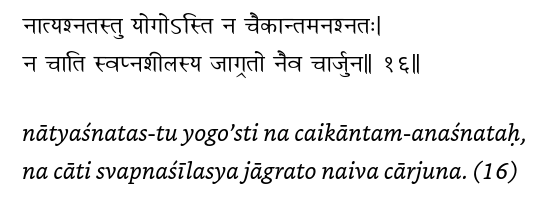
Bhagavad Gita Verse 6-16 – “Arjuna, those who eat too much or eat too little, who sleep too much or sleep too little, will not succeed in meditation.”
Dhammapada (Eknath Easwaran, Introduction)

In the forest, Siddhartha studied yoga – meditation – first with teachers, and then on his own, and finally practicing extreme austerities. In doing so he realized that his body was so worn down, however, Siddhartha discovered that he could no longer meditate well. His mind lacked the vitality for intense, sustained concentration. He changed course, and eventually attained Nirvana.

The “Middle Path” then became one of his core teachings. He taught this to student Sona, who in his overenthusiasm of spirituality was practicing extreme austerities. Since Sona used to love playing the vina (a musical instrument similar to Guitar), he took one to him after deliberately loosening its strings till they were limp as spagetti. He asked, “Sona, can you show me how to make music with this?” Sona took the instrument respectfully and fingered a few notes. Then he began to laugh. “Blessed One,” he said, “you can’t produce music when the strings are so loose!” “Oh, I see. Let me try again.” And he proceeded to wind the strings so tightly that Sona winced. When the Buddha tested them, all that came out was high-pitched squeaks. “Blessed One, that won’t work either. You’ll break the strings. Here, let me tune it for you.” He took the instrument, loosened the strings gently, and played a little of a haunting song. Then he stopped, for the music brought memories he was afraid to awaken. “It has to be tuned just right to make music,” he said abruptly, handing the vina back to the Buddha. “Neither too tight nor too loose. Just right.” “Sona,” the Buddha replied, “it is the same for those who seek nirvana. Don’t let yourself be slack, but don’t stretch yourself to breaking either. The middle course, lying between too much and too little, is the way of my Eightfold Path.”

Eknath Easwaran. The Dhammapada (Kindle Locations 527-535). Kindle Edition.

Tao Te Ching, and The Untethered Soul – Michael Singer Chapter 18
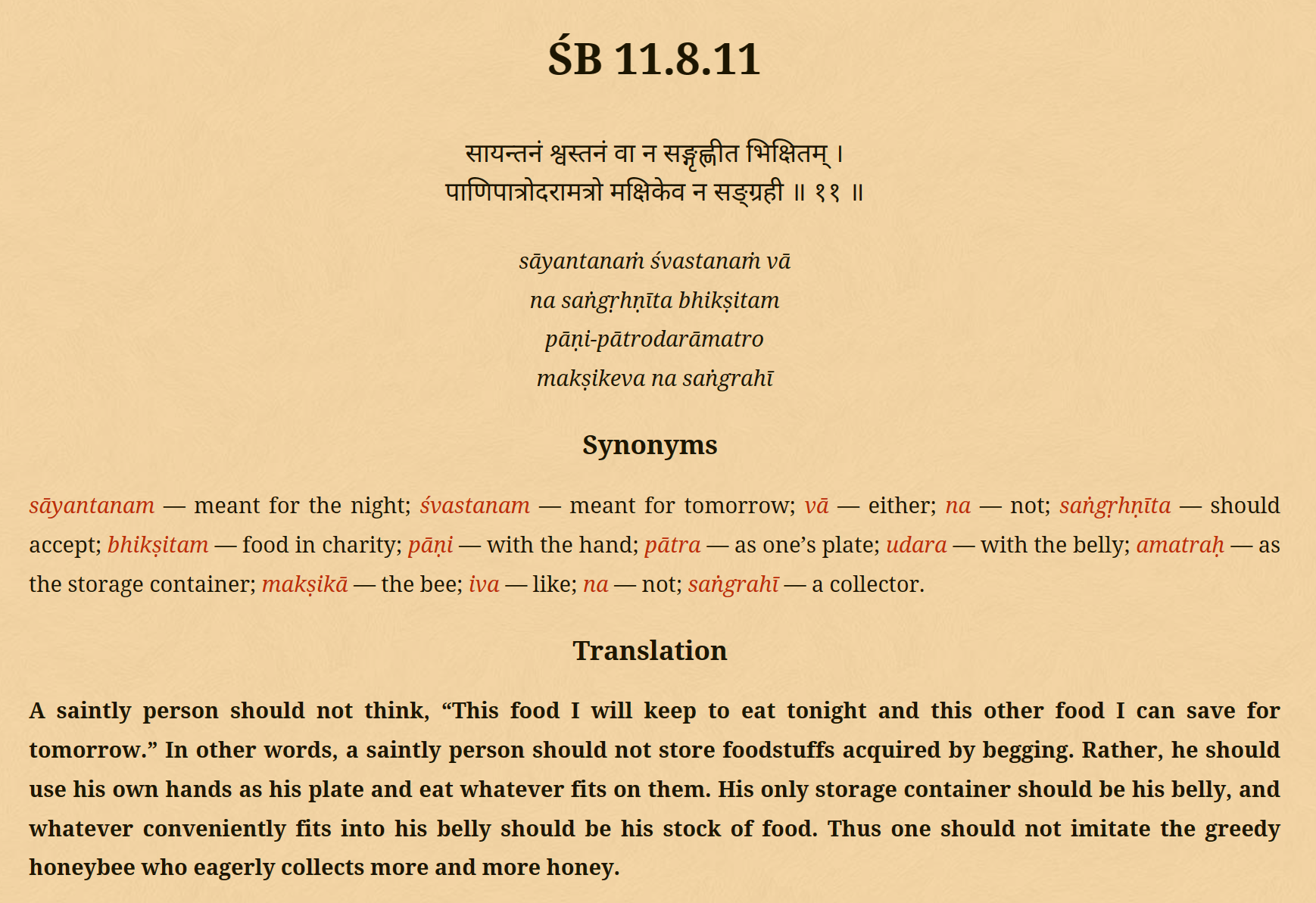
Srimad Bhagvatam 11.8.11

Scarcity Brain – Michael Easter

As an avid reader of non-fiction, personal development and self-help genre – I was familiar with a LOT of concepts that Michael talked about in the initial chapters, and due to that I was about to abandon this book after a first few chapters… but I am glad I did not…

“There is nothing new under the sun” – Ecclesiastes 1:9 NIV

This was said thousands of years ago, it’s in the Bible, and yet mankind takes what it has and connects it to create new stuff all the time. That is what Michael Easter has done in this really well-written book.

He first explained “scarcity loop”, and then connected it to our evolution from ancient prehistoric life, all the way to modern life. He connected it to various topics such as gambling, obesity, psychological tendencies to avoiding dealing with issues by using distractions, rise and misuse of social media, clutter, minimalism, information overload and happiness. He did so skillfully by weaving personal stories, scientific research and humor, making this book really enjoyable to read.

What made the book come alive were his personal examples. What’s turned out to relevant for me, may or may not be for another reader. But once you understand his core-premise (see summation below), you could jump to a chapter that interests you (e.g., food?). My recommendation, however, would be to read the book sequentially cover to cover.

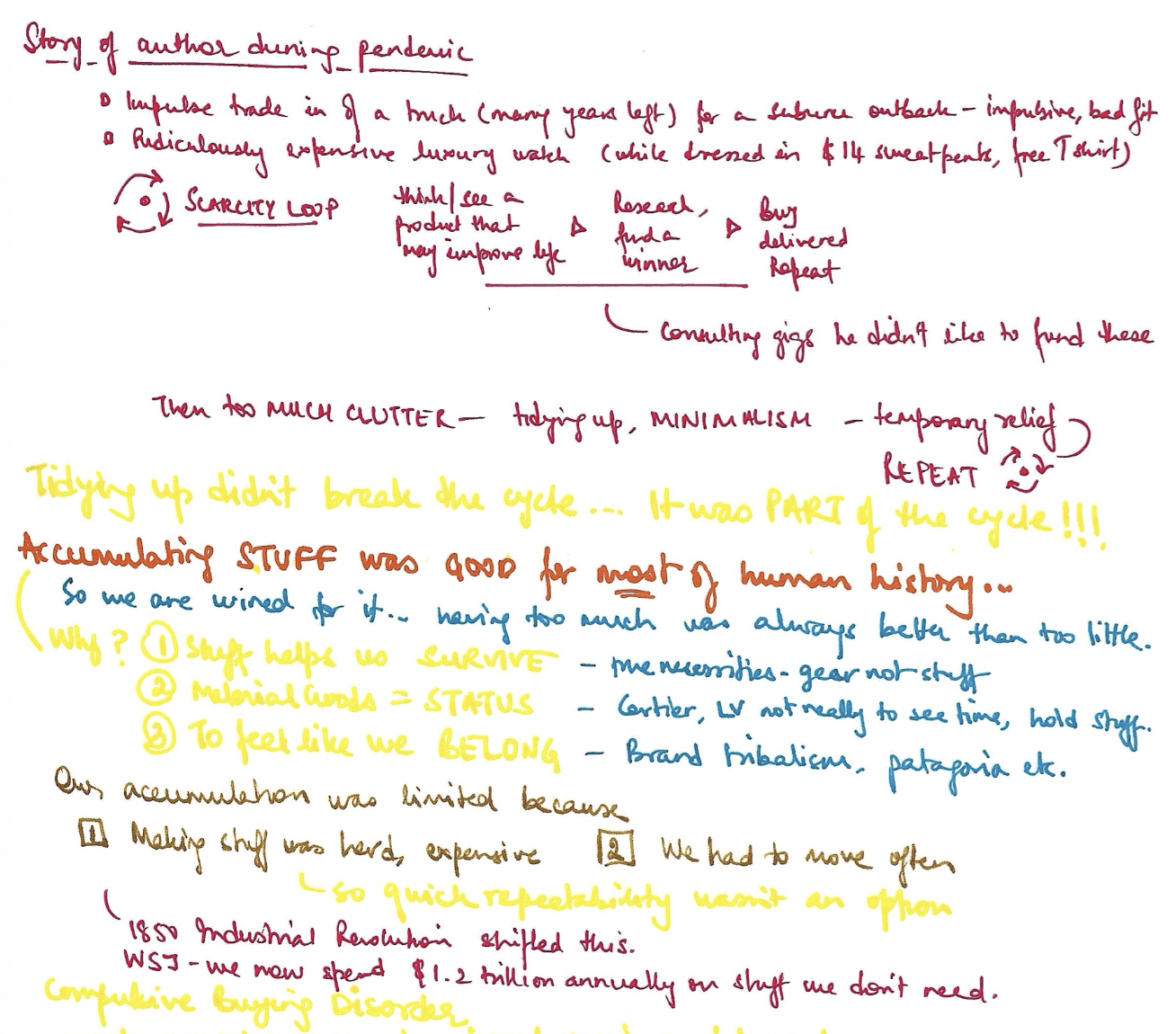
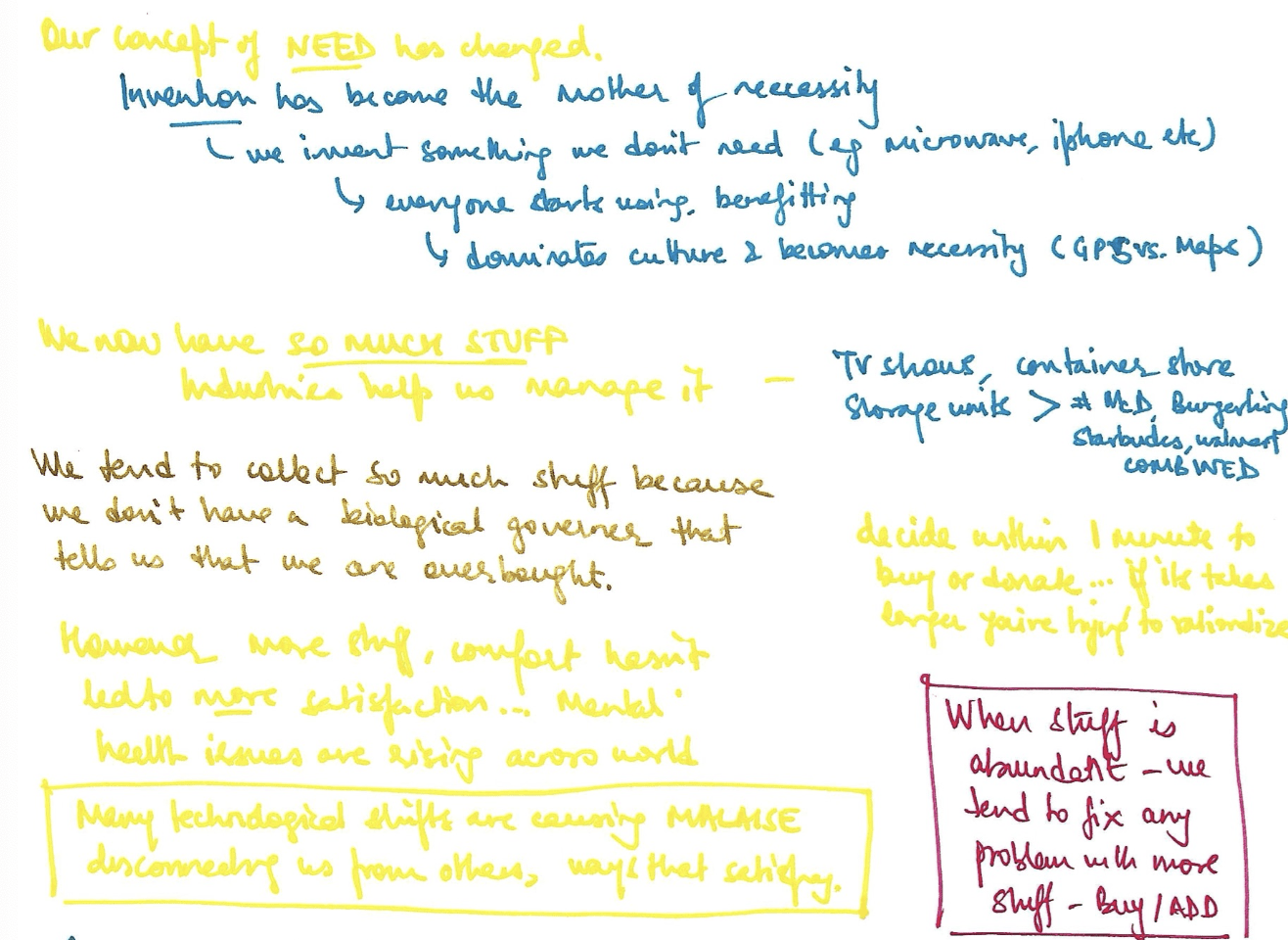
Core Premise – “The Scarcity Loop”

Some of my other favorite parts are given below:

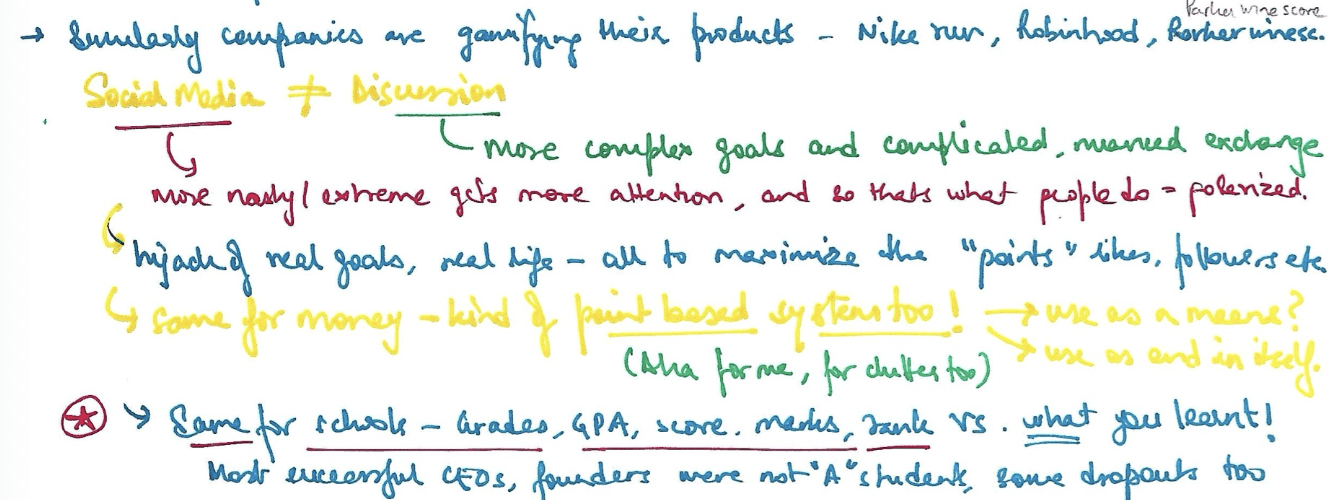
Chapter 6 gave me tips on how to raise my three year old kid – it explained how complex concepts like influence, friendships, learning are reduced to metrics – likes, followers, GPA – and then all people do is try to maximize the metric, and the core objective behind the metric takes a backseat. His personal story of how he enjoyed his hikes but once he got hooked to monitoring likes, he was always on the lookout for the best angle, and it took the fun out of his hikes.

Chapter 9 – Stuff was the most rewarding for me – as it was almost custom written for me. Some of the things he explained he did – around impulse purchases, struggling with clutter and cycling between accumulation and purging cycles were very relevant to my life.

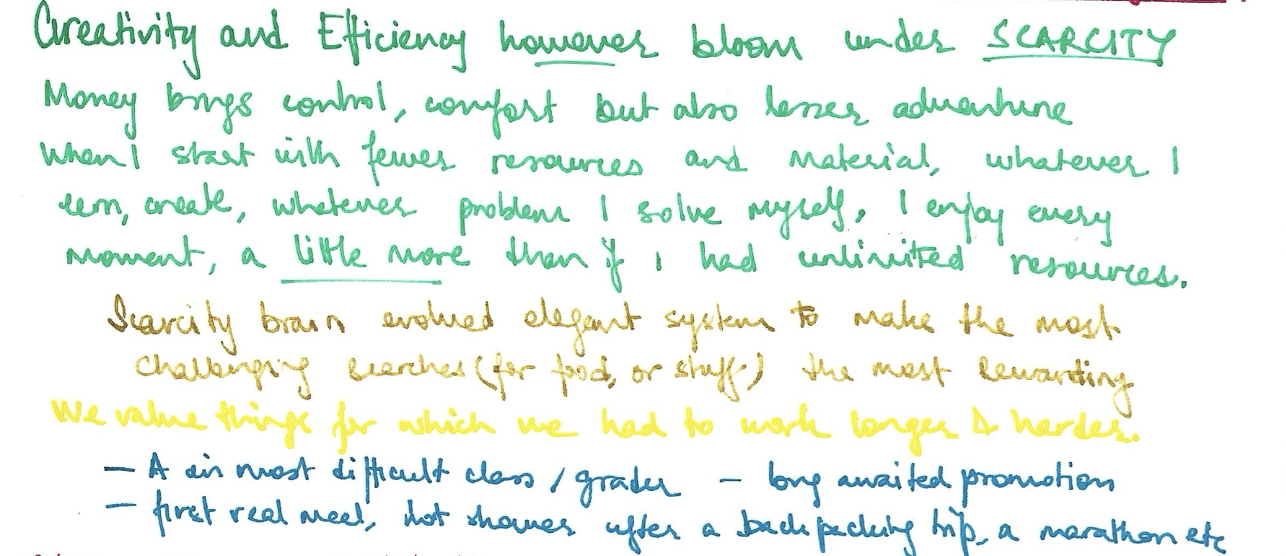
The he made one of the most brilliant point, that Austin Kleon also makes – Creativity Blooms under Scarcity. Growing up in a middle class family in India in the 90s, we had enough but not too much, and therefore we made the most of whatever we had. Everything was used till it fell apart, and often even then it was creatively repurposed. The first instinct for any problem was to improvise with what we already had. To some extent, the poor communities of India still do that, and lovingly call it “juggad”

His conclusion and line “GEAR not STUFF” has already helped me avoid impulse purchases and hopefully the habit change will stick.

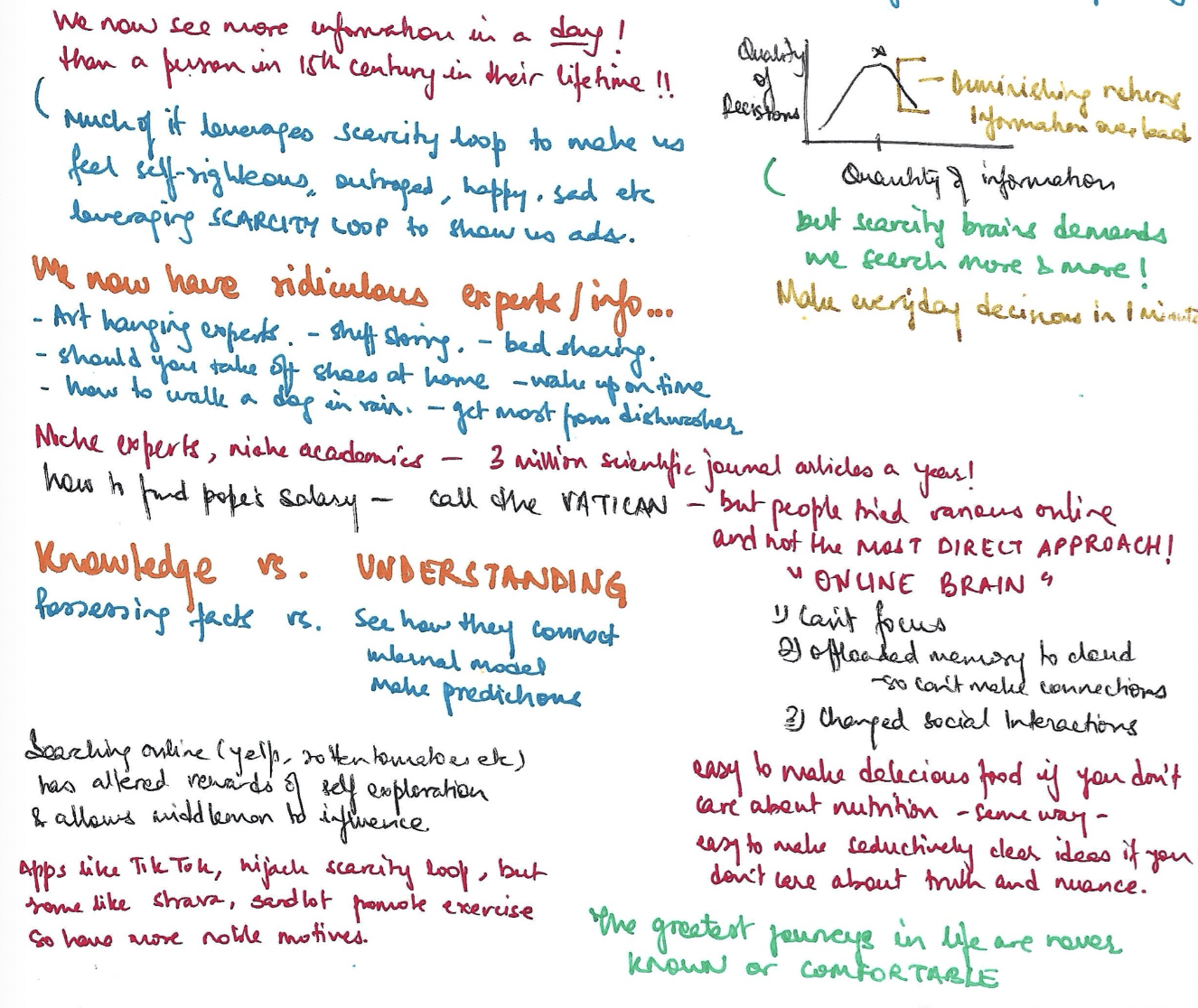
Chapter 10, on how we humans seek information, and have shifted to doing so online was very informative, and witty – especially how he brought to light why some of the really random articles in prestigious newspapers like NYTimes – are about trivial stuff like – how to walk a dog in rain, how to get the best out of your dishwasher etc…

In all, a really well-written book. I immediately put a hold on his earlier book – “the comfort crisis” and can’t wait to review it. I have a feeling that it will be quite good too.

The Power of Journalling

Having read so much about the benefits of journaling, I decided to give it a shot. Today, I started my third journal, having written for 157 days… Nov 1, 2022 to April 6, 2023.

Journaling is a deeply personal exercise, and each person does it differently. My journals are for the most part, activity logs. I summarize what I did each day, key metrics (e.g., sleep, screen time, exercise) and key highlights (e.g., wins, disappointments, learnings).

Initially, it felt like a waste of time. Questions like – who am I writing this for? What is the end-game here? That changed after I read Ryder Carroll’s Bullet Journal Method. While I did not adopt most of his recommendations – the one about “migration” really worked well for me. For me, migration is pausing, reflecting on your entries and identifying patterns. You can do it at whatever frequency you choose – I do it every 3 weeks, and then when I finish a journal. This review helps me learn my patterns, see what works well and what does not.

One of my favorite quote is from Annie Dillard, “How we spend our days is of course how we spend our lives“. Reviewing my journals helps me live intentionally. We are familiar with the power of data analytics – well, to harness that power – you got to have “data” first – and journals provide just that.

Perfection – Creativity’s Enemy #1

After reading so many books on creativity (Austin Kleon’s Steal like an artist, Show your work and Keep going, and Matt Richter’s Inspired) – I should know better… However…

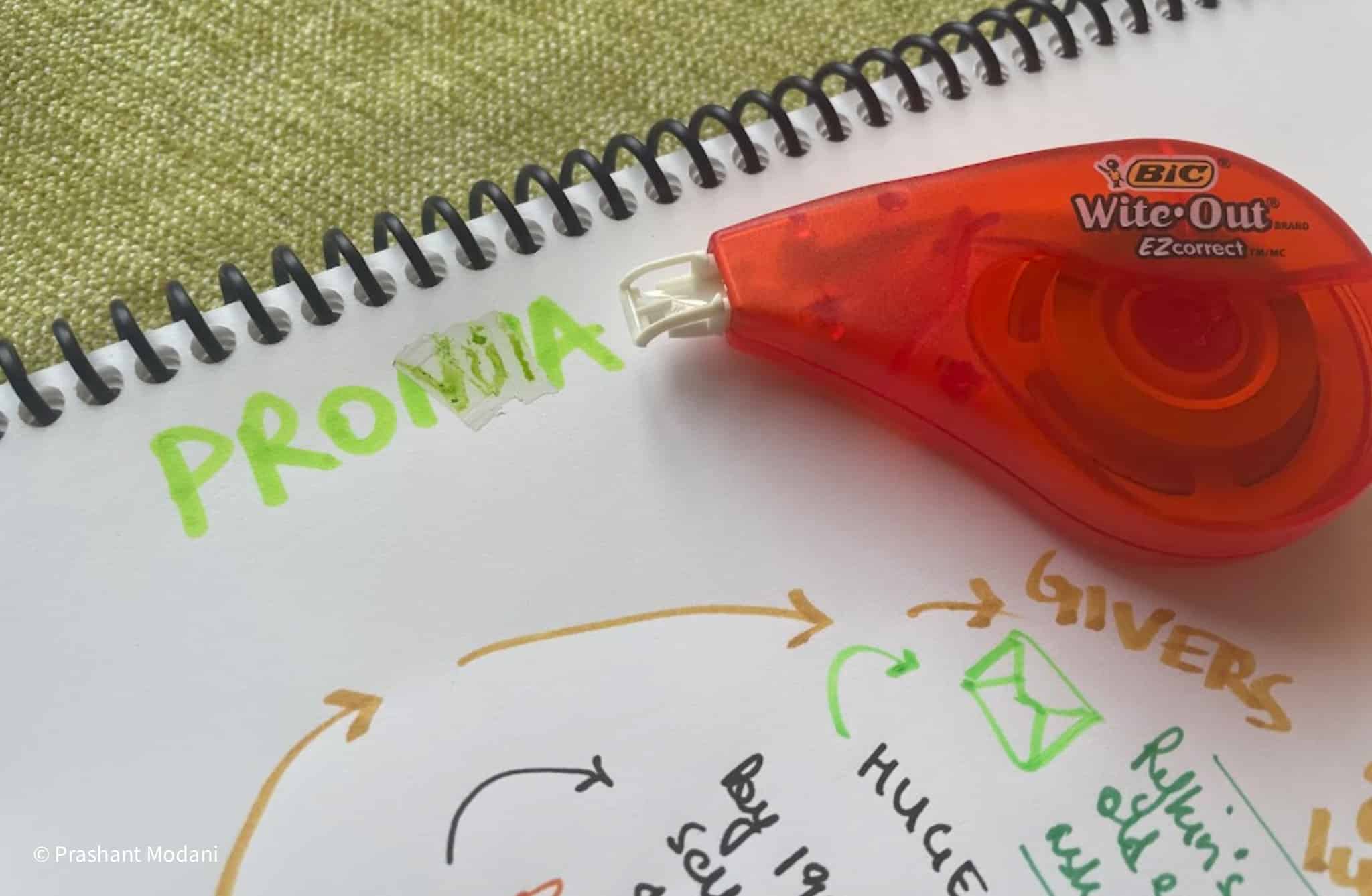
Recently, when I made an error… I first tried to use wite-out, but was not happy with the result
Then, I tried to cut a small piece of the paper and use glue to paste it on the error…
and then… I let it dry for a few seconds…
Voila! Error overwritten… and didn’t throw away the whole page… so some progress! However, real progress would have been to just strike the error out, and keep going… or better still, live with the typo (missing 2nd O)

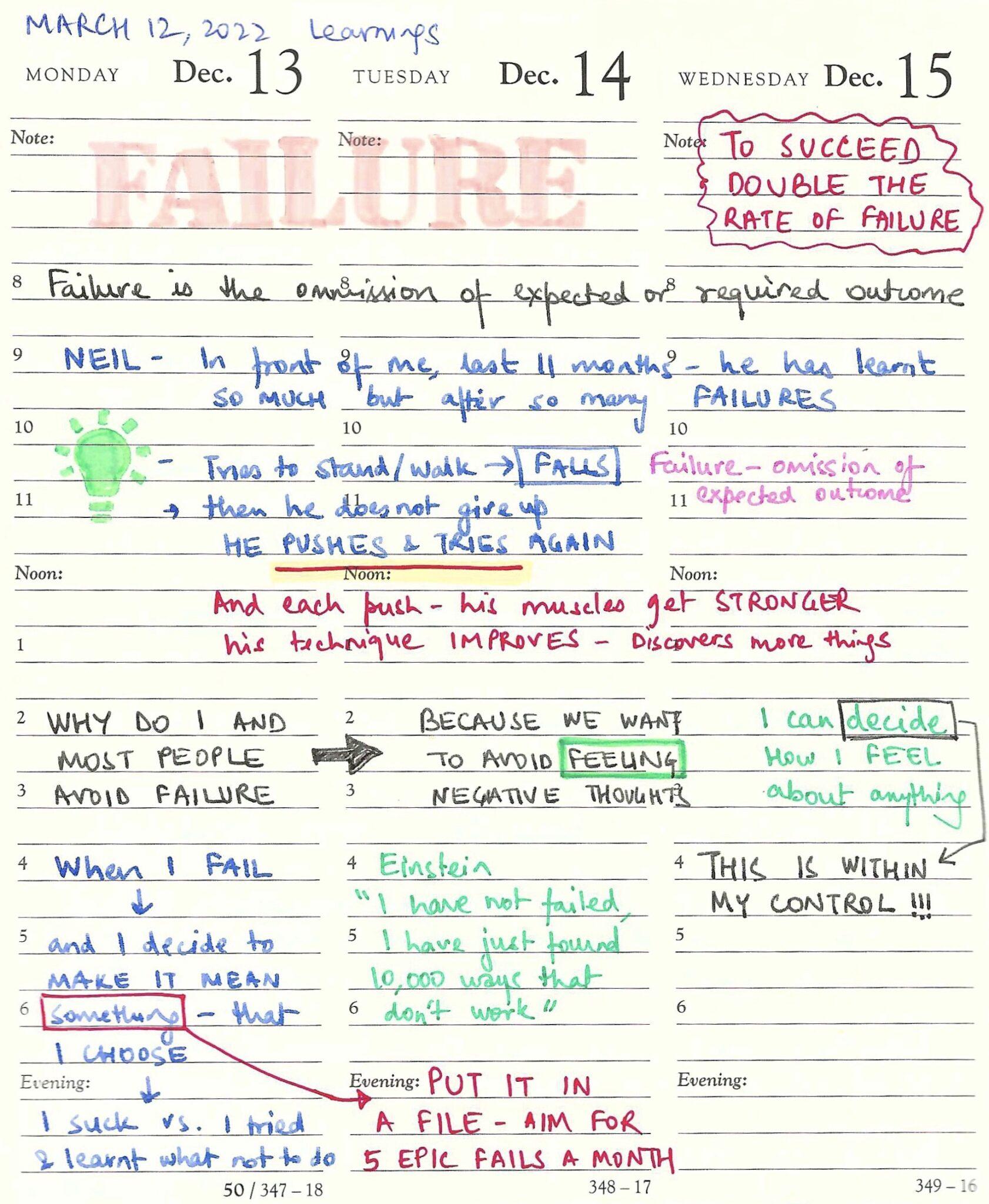
Overcoming Fear of Failure

I have so many interests – at work and in life, which I never ever try – to avoid making a “fool” of myself. Like this site, for example – didn’t make it because – who would want to read or view it? Won’t people just judge? These thoughts, fear of failure! stopped me!

Then, episode four of Brooke Castillo’s podcast gave me the aha moment! Her unique way of teaching makes everything so simple! If you’re in a rush, my notes below summarize key takeaways, but if you have 27 minutes, I recommend you use the link above to listen to her.

Why that increment won’t make you happy!

There is a problem with improving life circumstances as a path to increasing happiness. It goes by the frightening name of hedonic adaptation. Simply put, hedonic adaptation (also known as hedonic treadmill) means we are very good at quickly assimilating our current position, and then judging it as normal, hence only changes from our “normal” level get noticed.

Gains in happiness quickly become the norm. So changing life circumstances seems to lead to only temporary improvement in people’s happiness. This helps explain in the chart below, which shows that since the 1950s people’s happiness levels have been remarkably constant, despite a massive growth in income per head over the same time horizon.

Another researcher, Schkade and Kahneman (1998) show that whilst “living in California” was an appealing idea for many Americans, it didn’t actually boost long run happiness. That is to say, people living in California were about as happy as other Americans on average. So whilst moving may provide a temporary increase in happiness, it is soon adapted into the perception of the “norm”. Hence hedonic adaptation severely limits the ability of changing life circumstances to improve long run happiness.

All of this means that any hope for increasing happiness on a long term basis must lie with intentional activity. Sheldon et al define intentional activity as “discrete actions or practices that people can choose to do”.

Intentional activity can be broken down into three areas:

  1. Behavioural activities – such as exercising regularly, having sex, being kind to others, and spending time socialising.
  2. Cognitive activities – such as trying to see the best, pausing to count how lucky one actually is.
  3. Volitional activities – striving for personal goals, devoting effort to meaningful causes.

Unlike changing life circumstances, intentional activity is more resistant to hedonic adaptation. The very nature of activities means they are episodic, and hence are unlikely to become part of the “norm” in the way alterations to circumstances do. Because activities are not permanent they can be varied which again helps prevent hedonic adaptation. For instance, in taking exercise the particular activity can easily be altered from cycling to swimming. Cognitive activities such as pausing to think about the good things in one’s life can also help counteract the hedonic adaptation process directly. After all, counting one’s blessing helps to prevent them from becoming part of the “norm”.

Of course, just like New Year’s resolutions, happiness increasing strategies are relatively easy to devise, but far harder to implement on a consistent basis. A deliberate effort is required to pursue activities listed above… except having sex, I guess 😉

(Excerpt from James Montier’s whitepaper on happiness)

Begin with the End in Mind…

Excerpt from Stephen Covey’s Seven habits of highly effective people

What lies behind us and what lies before us are tiny matters compared to what lies within us
— Oliver Wendell Holme

To Begin with the End in Mind means to start with a clear understanding of your destination. It means to know where you’re going so that you better understand where you are now and so that the steps you take are always in the right direction. It’s incredibly easy to get caught up in an activity trap, in the busy-ness of life, to work harder and harder at climbing the ladder of success only to discover it’s leaning against the wrong wall.

It is possible to be busy — very busy — without being very effective.

People often find themselves achieving victories that are empty, successes that have come at the expense of things they suddenly realize were far more valuable to them. People from every walk of life — doctors, academicians, actors, politicians, business professionals, athletes, and plumbers — often struggle to achieve a higher income, more recognition or a certain degree of professional competence, only to find that their drive to achieve their goal blinded them to the things that really mattered most and now are gone.

How different our lives are when we really know what is deeply important to us, and, keeping that picture in mind, we manage ourselves each day to be and to do what really matters most. If the ladder is not leaning against the right wall, every step we take just gets us to the wrong place faster. We may be very busy, we may be very efficient, but we will also be truly effective only when we Begin with the End in Mind.

All Things Are Created Twice

“Begin with the End in Mind” is based on the principle that all things are created twice. There’s a mental or first creation, and a physical or second creation to all things

For example, look at a business. If you want to have a successful enterprise, you clearly define what you’re trying to accomplish. You carefully think through the product or service you want to provide in terms of your market target, then you organize all the elements — financial, research and development, operations, marketing, personnel, physical facilities, and so on — to meet that objective.

The extent to which you Begin with the End in Mind often determines whether or not you are able to create a successful enterprise. Most business failures begin in the first creation, with problems such as under capitalization, misunderstanding of the market, or lack of a business plan.

To the extent to which we understand the principle of two creations and accept the responsibility for both, we act within and enlarge the borders of our Circle of Influence (i.e. things over which we have control). To the extent to which we do not operate in harmony with this principle and take charge of the first creation, we diminish it.

Stephen Covey’s ideas appeal immediately to any rational thinker, but its easy to lose track of the “end” due to the hectic days that we have… but when we move each step, with the end in mind – we know truly that we are headed in the correct direction. Once the end is clear in your mind – a plan, a road map is of key importance because all things are indeed created twice – once in the mind and then in reality. The mind is very powerful. Whatever it can conceive and believe in… it can achieve. Remember the carpenter’s rule measure twice – cut once!