
As an avid reader of non-fiction, personal development and self-help genre – I was familiar with a LOT of concepts that Michael talked about in the initial chapters, and due to that I was about to abandon this book after a first few chapters… but I am glad I did not…
“There is nothing new under the sun” – Ecclesiastes 1:9 NIV
This was said thousands of years ago, it’s in the Bible, and yet mankind takes what it has and connects it to create new stuff all the time. That is what Michael Easter has done in this really well-written book.
He first explained “scarcity loop”, and then connected it to our evolution from ancient prehistoric life, all the way to modern life. He connected it to various topics such as gambling, obesity, psychological tendencies to avoiding dealing with issues by using distractions, rise and misuse of social media, clutter, minimalism, information overload and happiness. He did so skillfully by weaving personal stories, scientific research and humor, making this book really enjoyable to read.
What made the book come alive were his personal examples. What’s turned out to relevant for me, may or may not be for another reader. But once you understand his core-premise (see summation below), you could jump to a chapter that interests you (e.g., food?). My recommendation, however, would be to read the book sequentially cover to cover.
Core Premise – “The Scarcity Loop”

Some of my other favorite parts are given below:

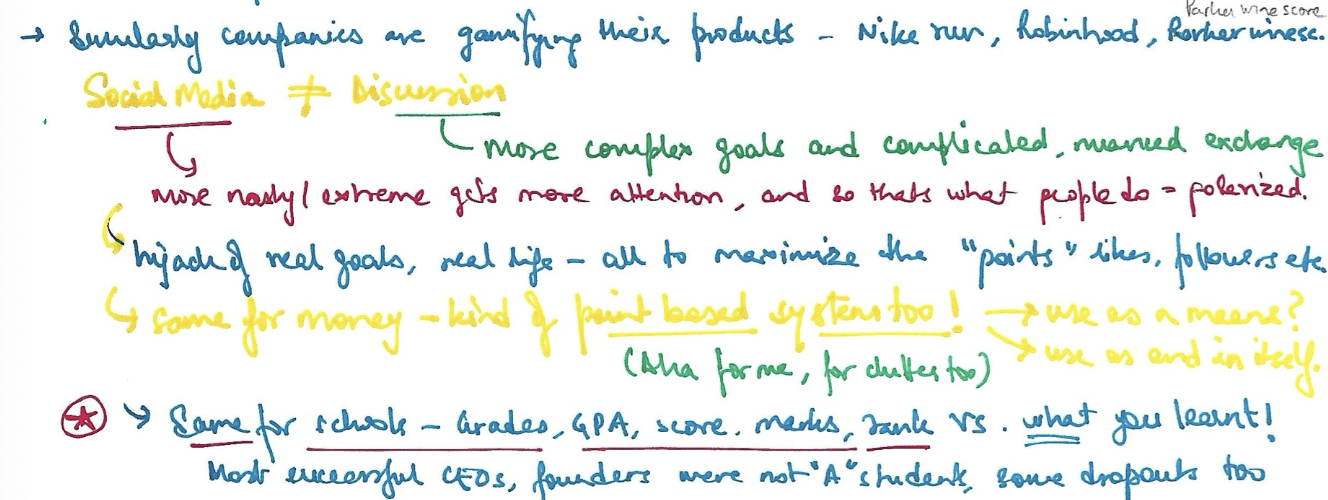
Chapter 6 gave me tips on how to raise my three year old kid – it explained how complex concepts like influence, friendships, learning are reduced to metrics – likes, followers, GPA – and then all people do is try to maximize the metric, and the core objective behind the metric takes a backseat. His personal story of how he enjoyed his hikes but once he got hooked to monitoring likes, he was always on the lookout for the best angle, and it took the fun out of his hikes.
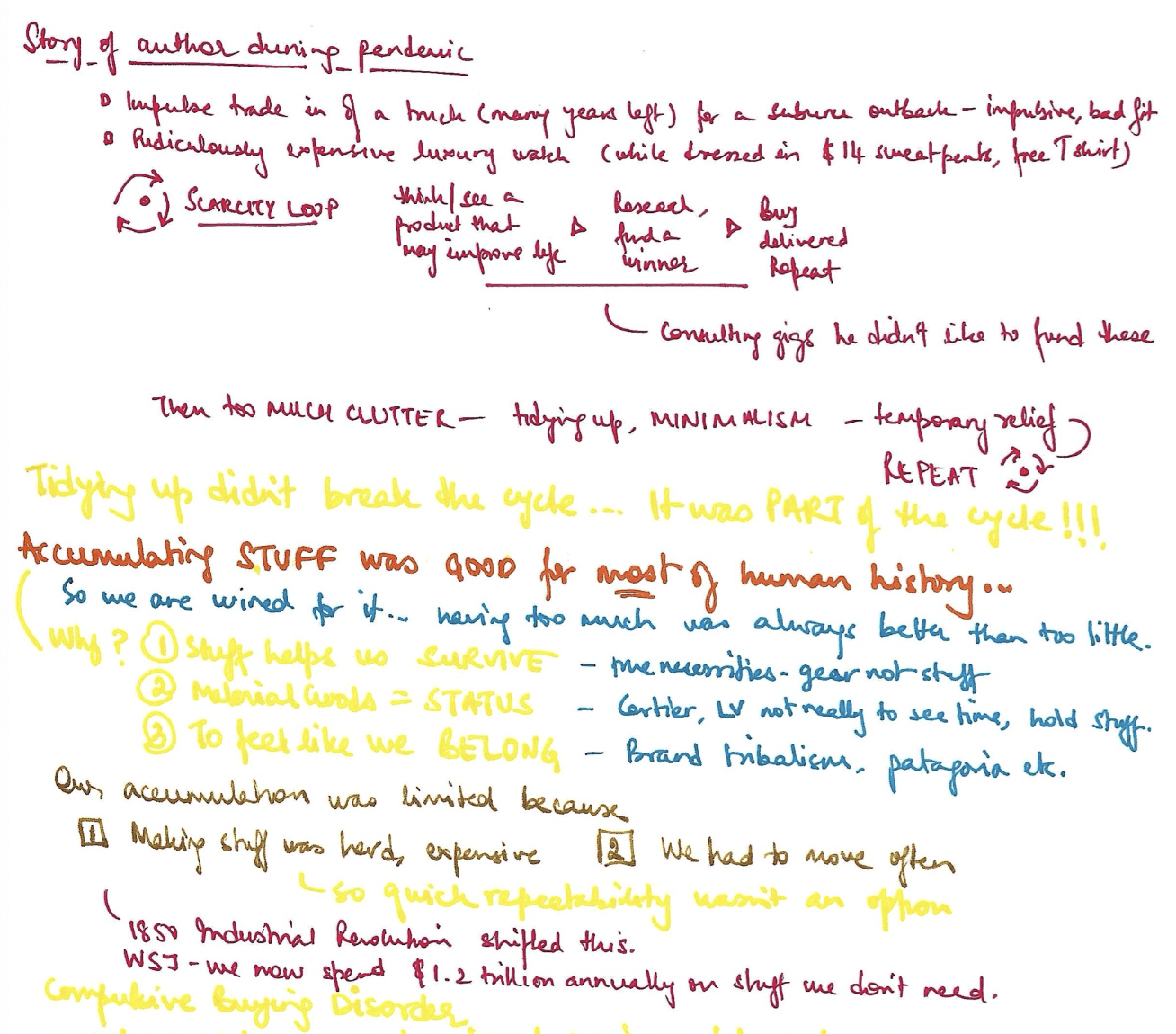
Chapter 9 – Stuff was the most rewarding for me – as it was almost custom written for me. Some of the things he explained he did – around impulse purchases, struggling with clutter and cycling between accumulation and purging cycles were very relevant to my life.
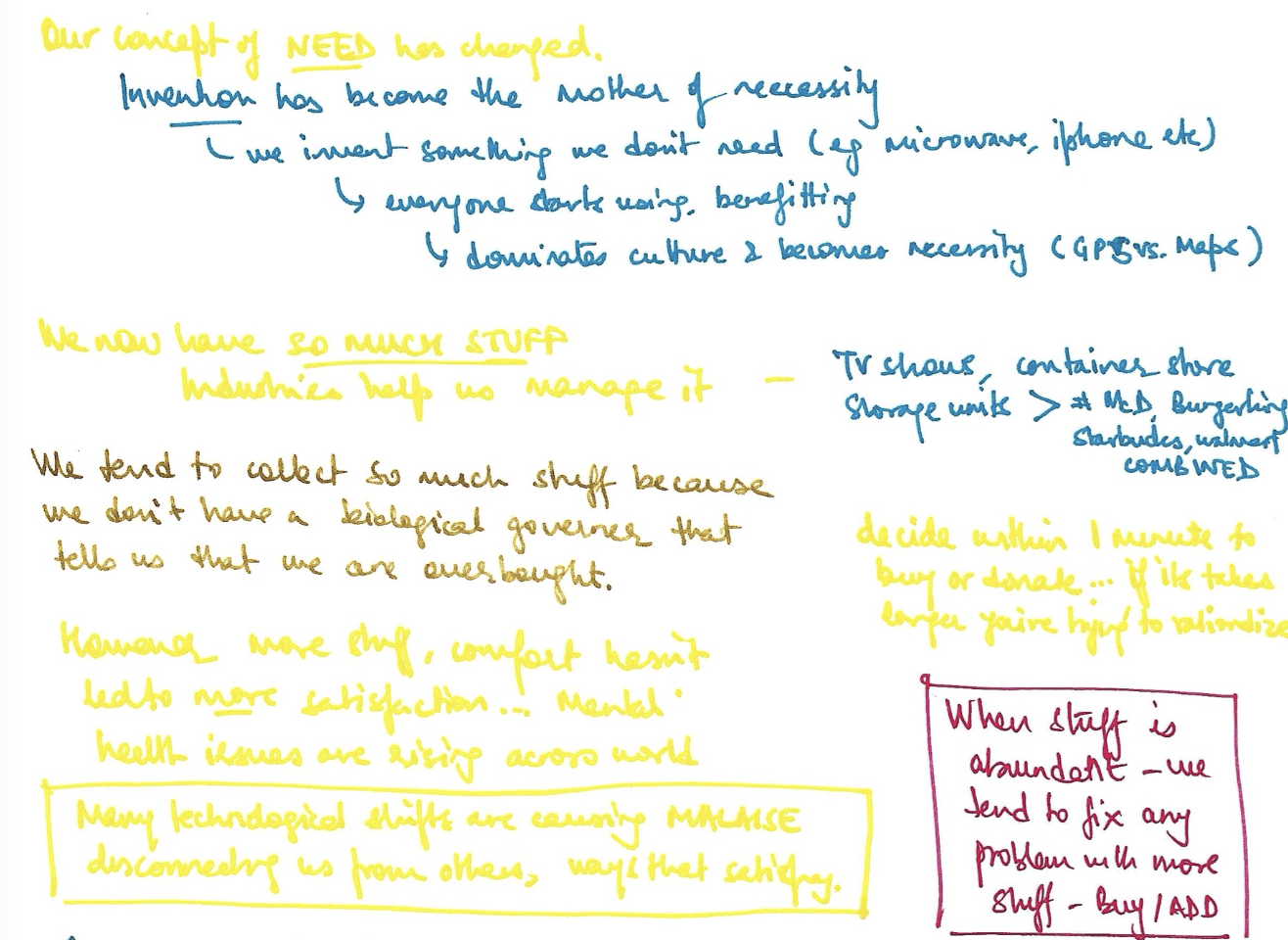
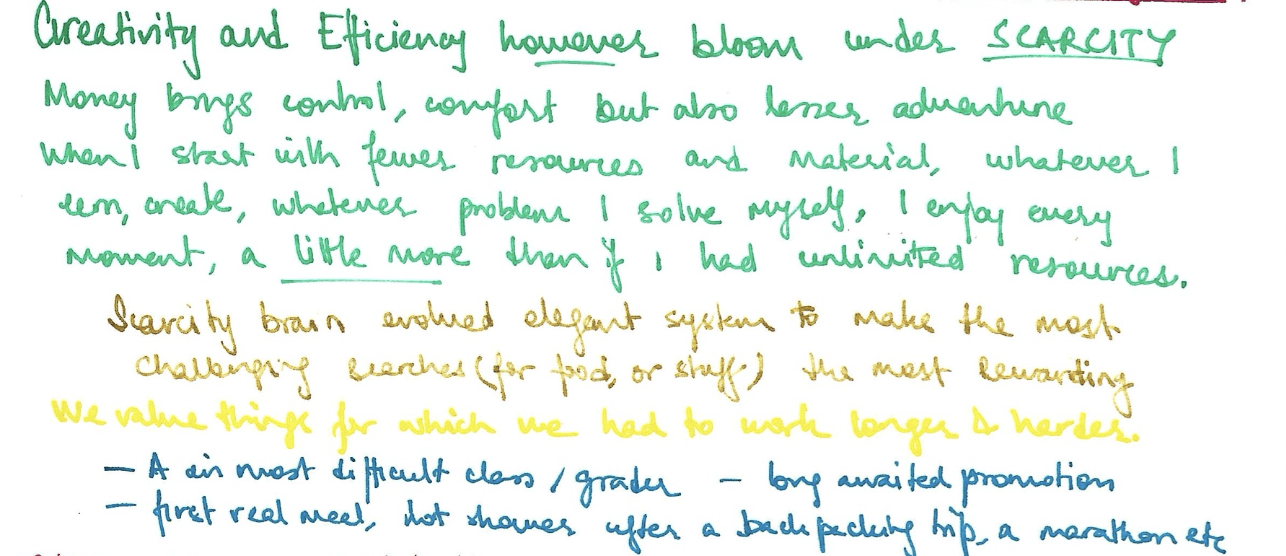
The he made one of the most brilliant point, that Austin Kleon also makes – Creativity Blooms under Scarcity. Growing up in a middle class family in India in the 90s, we had enough but not too much, and therefore we made the most of whatever we had. Everything was used till it fell apart, and often even then it was creatively repurposed. The first instinct for any problem was to improvise with what we already had. To some extent, the poor communities of India still do that, and lovingly call it “juggad”
His conclusion and line “GEAR not STUFF” has already helped me avoid impulse purchases and hopefully the habit change will stick.

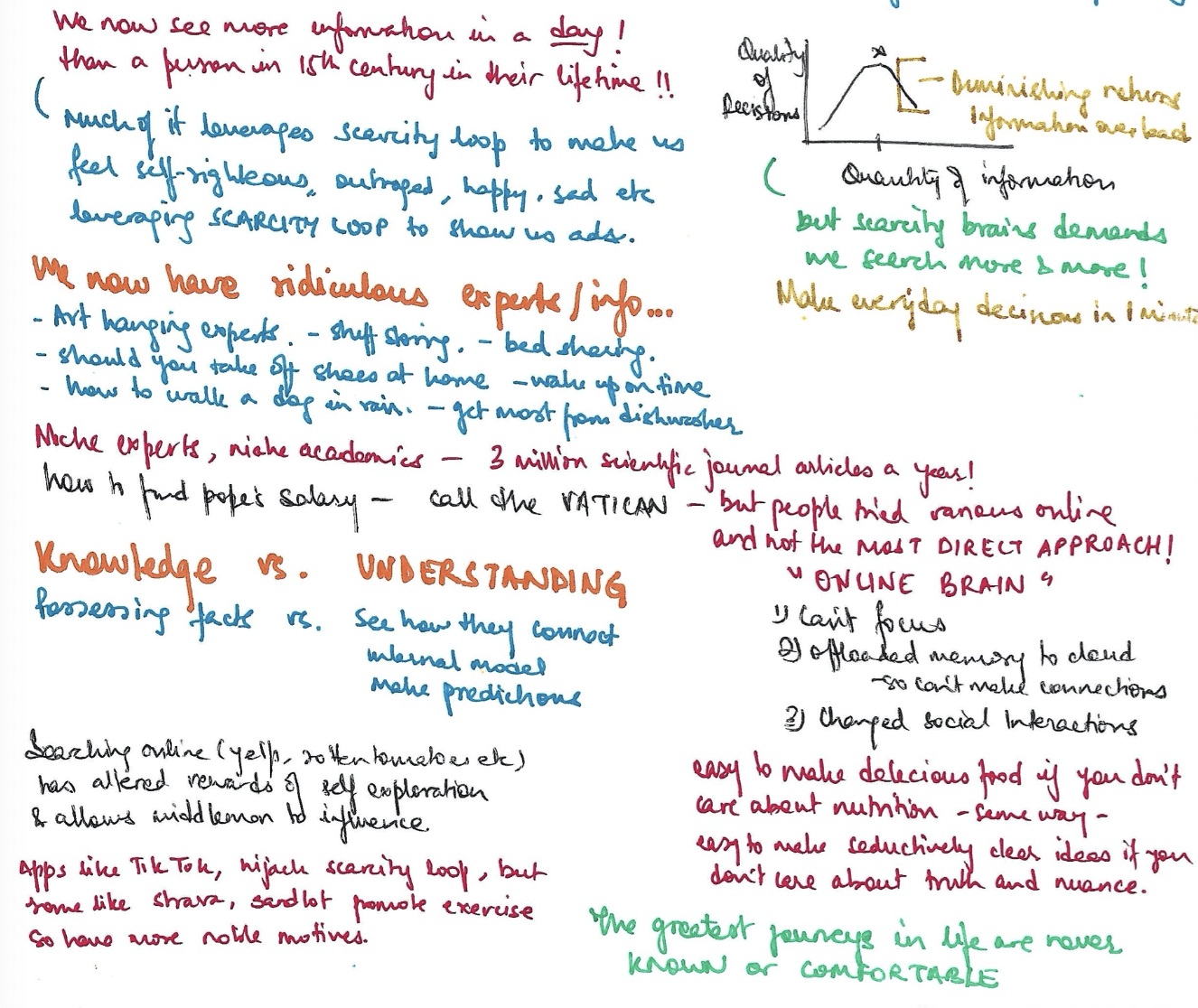
Chapter 10, on how we humans seek information, and have shifted to doing so online was very informative, and witty – especially how he brought to light why some of the really random articles in prestigious newspapers like NYTimes – are about trivial stuff like – how to walk a dog in rain, how to get the best out of your dishwasher etc…
In all, a really well-written book. I immediately put a hold on his earlier book – “the comfort crisis” and can’t wait to review it. I have a feeling that it will be quite good too.